
Spike in enforced disappearances, warns UN chief
Enforced disappearances are seeing an “alarming increase” in many parts of the world, António Guterres warned on Monday, as he spoke out in support of a top human rights committee’s key role in protecting victims and helping their families.
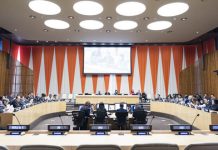
Addressing the Committee on Enforced Disappearances meeting in Geneva, the UN Secretary-General highlighted the rising number of requests to the panel of independent experts to help find missing loved ones.
In the last six months alone, nearly 150 new requests have been lodged with the Committee to approach countries and ask them to immediately search for, locate and protect those disappeared.
“Every one of these cases represents a person whose fate or whereabouts remain unknown and a family living with uncertainty, anguish and often profound socioeconomic consequences,” Mr. Guterres said, in a prepared statement.
(A total of) 574 disappeared persons has been located since the Committee urged countries to find them, including 437 individuals found alive.
Also speaking at the meeting was Maria Adela Antokoletz, sister of Daniel, a lawyer who defended political prisoners and was abducted in 1976 in Argentina and never seen again:
“Where could Daniel be? We did not realize that we would have to adopt a terrible word – the word “disappeared” – to describe his situation. We believed he was being held prisoner. In those early days, we felt a mixture – or at least I did – of shock and pain. In recent years, however, a profound pain is what predominates, pain that does not hinder – but rather drives – constant work through peaceful means to find truth and justice through memory.”
This month marks 20 years since the adoption of the International Convention for the Protection of All Persons from Enforced Disappearances.
The accord is the only universal treaty dedicated to preventing and eradicating enforced disappearances, with a focus on victims’ rights to truth, justice and reparation.
South Sudan: UNICEF reaches communities cut off by conflict in Jonglei state
The UN Children’s Fund (UNICEF) and partners have delivered lifesaving assistance to families impacted by conflict in South Sudan’s Jonglei state, many going months without humanitarian support.
Jonglei is one of several states that have seen a return to fighting between Government and opposition forces.
“Access challenges in Jonglei state have left the lives of mothers and their children hanging in the balance,” said Noala Skinner, UNICEF South Sudan Country Representative.
She noted that operating conditions in northern Jonglei remain challenging, amid escalating fighting since January, that has also sparked mass displacement.
The unsafe conditions have left communities cut off from basic services and forced health facilities to close.
UNICEF said that its teams delivered more than eight tonnes of essential supplies through its Rapid Response Mechanism to isolated communities in Wiechjol, a town in Akobo County, and in Waat, Nyirol County.
Gaza: Another strike on an UNRWA school sheltering displaced families
To Gaza, where six more UN workers have been killed at a school sheltering displaced families, amid ongoing strikes by the Israeli military.
That’s the latest update from the UN agency for Palestine refugees, UNRWA, which said that civilians were also killed in last Friday’s blast.
At least 220 UNWRA staff have been killed in Gaza since the war began in October 2023, sparked by Hamas-led terror attacks in southern Israel.
In comments condemning the latest violence, UNRWA Acting Commissioner-General, Christian Saunders, insisted that the safety of humanitarian staff, premises and operations had been blatantly disregarded since the beginning of the war.
Today in Gaza, nine in 10 people are internally displaced, including people who have been repeatedly forced to move.
According to the UN World Health Organization (WHO), around one in four people in the enclave are likely to have acute and ongoing care needs; this includes patients with extreme injuries, amputations, head and spinal cord injuries and burns.
Daniel Johnson, UN News
Source of original article: United Nations (news.un.org). Photo credit: UN. The content of this article does not necessarily reflect the views or opinion of Global Diaspora News (www.globaldiasporanews.com).
To submit your press release: (https://www.globaldiasporanews.com/pr).
To advertise on Global Diaspora News: (www.globaldiasporanews.com/ads).
Sign up to Global Diaspora News newsletter (https://www.globaldiasporanews.com/newsletter/) to start receiving updates and opportunities directly in your email inbox for free.