

That’s according to the UN migration agency, IOM.
Forces from the Somali and Oromia regions in Southern Ethiopia have been fighting for over two decades over boundary demarcations and resources, with recent escalations since last week sparking a new wave of displacement.
Amongst those who fled, nearly 11,000 have sought sanctuary within the large compound of the Oriental Mission Church (OMC), a prominent Korean-American Christian organisation based in Los Angeles, which does missionary and humanitarian work in Kenya, said IOM.
Community support
The remaining 25,600 people are being hosted by communities along the border.
IOM is working with the Kenyan government and the UN refugee agency, UNHCR, to collect and manage displacement data, as well as assess humanitarian needs.
So far it has identified needs for water and sanitation, shelter and essential household items, food assistance, health support and protection.
It also stresses the need to pay special attention to the needs of host communities, who are accommodating most of the displaced, despite already limited resources.
Lindberg takes helm at WFP with call to end famine
Luke J. Lindberg took office as Executive Director of the UN World Food Programme (WFP) on Monday, calling on donors, partners and supporters worldwide to help sustain the agency’s life-saving work.
“Conflict is driving people into hunger, and extreme weather and maritime choke points exacerbate this reality,” Mr. Lindberg said.
“We cannot do it alone. Governments, institutions, businesses, and individuals need to stand with us, fund the work, and help get food to people before it’s too late. No more famines.”
Millions in need
As many as 266 million people faced acute hunger worldwide last year, with conflict driving the most severe crises. WFP teams currently operate in 83 countries.
Mr. Lindberg succeeds Cindy McCain, who led WFP from April 2023 to May 2026, and Carl Skau, who has served as Acting Executive Director since June.
He previously served as Under Secretary for Trade and Foreign Agricultural Affairs at the US Department of Agriculture.
Somalia takes the lead as UN mission bows out after three decades
The UN’s political mission in Somalia will close on Saturday, ending more than three decades of UN missions in the country supporting peace, state-building and reconciliation.
The UN Transitional Assistance Mission in Somalia (UNTMIS) completes its two-year mandate on 31 October.
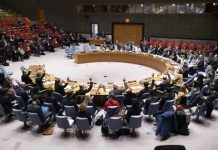
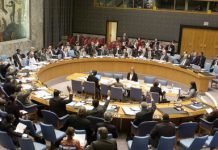
The Security Council has decided not to renew it, at the request of the Somali Government, which wants to take greater ownership of its own peacebuilding and state-building.
The mission’s work will pass to Somali institutions and to the UN agencies, funds and programmes already operating in the country.
Tribute to those who served
Secretary-General António Guterres praised the progress made over the decades and thanked those who made it possible, in particular his successive Special Representatives and the mission’s staff.
He also paid tribute to UN personnel who lost their lives while serving in Somalia.
Mr. Guterres acknowledged that Somalia still faces serious political, security, humanitarian and development challenges, and called on the international community to keep up its support so that the gains made are not lost.
That means pushing forward with inclusive political dialogue and reconciliation, building stronger institutions, protecting human rights and confronting Al Shabaab, the Somalia-based terrorist group affiliated with al-Qaeda.
Source of original article: United Nations (news.un.org). Photo credit: UN. The content of this article does not necessarily reflect the views or opinion of Global Diaspora News (www.globaldiasporanews.com).
To submit your press release: (https://www.globaldiasporanews.com/pr).
To advertise on Global Diaspora News: (www.globaldiasporanews.com/ads).
Sign up to Global Diaspora News newsletter (https://www.globaldiasporanews.com/newsletter/) to start receiving updates and opportunities directly in your email inbox for free.