
Control of critical minerals in spotlight at Security Council
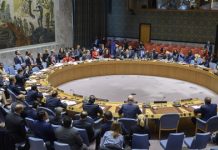
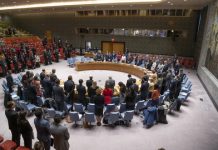
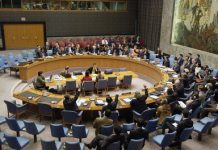
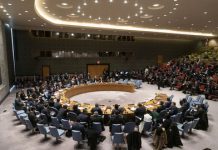
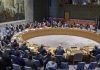
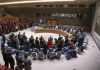
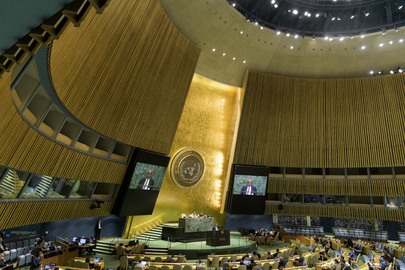
We start in New York, where the Security Council has gathered to discuss how to ensure that the extraction of natural resources promotes peace, security and development, rather than conflict and misery.
The meeting comes as mining for critical elements such as lithium, cobalt, copper and more surges ahead, powering the clean energy transition.
But the control and exploitation of natural resources are also “dramatically altering the causes, dynamics and outcomes of conflict” across the world, UN Secretary-General António Guterres told the Council.
He cautioned that with demand for critical minerals set to triple by 2030, the trend is driving intense geopolitical competition, with dire humanitarian consequences.
The Special Rapporteur for Climate Change, Elisa Morgera, highlighted how indigenous territories need protection, as they are where most critical minerals are located and where “well-known human rights violations” happen:
“We know how to prevent. We know what procedures to follow in terms of sharing sufficient information, supporting free prior informed consent, undertaking prior environmental assessments. And yet, all of this is not happening, and in fact, what we’re seeing is many Governments, even exempting mining operations from those very basic human rights and environmental guarantees in a rush to approve those energy transition mining projects..”
The issue impacts many developing countries, such as the Democratic Republic of the Congo; it alone produces around 70 per cent of the world’s cobalt, which is essential for rechargeable batteries used in electric vehicles.
The UN is supporting efforts to ensure that the DR Congo’s natural mineral wealth contributes to its economic development.
Nicaragua: Türk deplores clampdown on civil and political freedoms
To Nicaragua, where opposition candidates in upcoming elections face being barred, because of their dissenting political views, UN human rights chief Volker Türk has warned.
In an alert on Wednesday, the top UN official said that he deplored these developments which are preventing people from exercising their civil and political rights.
It follows Nicaraguan co-president Daniel Ortega’s announcement of new laws that could bar people and groups from elections.
Mr. Türk noted that the Government revoked the credentials of lawyers earlier this month “without any legal basis or official explanation”.
At least 46 individuals remain arbitrarily detained for political reasons too, he said.
With more, here’s spokesperson for the High Commissioner, Ravina Shamdasani:
“Power is being increasingly placed under the co-presidency. We are disturbed also by reports of repression against the Catholic Church and other religious denominations, including by the absence of official information on the fate or whereabouts of 80-year-old bishop Abelardo Marta Guevara, who was detained on 29 June. We urge the authorities to release immediately all individuals who have been arbitrarily detained and to ensure that all those detained are treated with humanity and dignity in line with Nicaragua’s obligations under international human rights law.”
In his call to the Nicaraguan authorities to “restore the rule of law”, Mr. Türk warned that the civic space has been almost shut down, while independent expression is “systematically suppressed”.
Deadly Afghanistan flooding leaves communities searching for survivors
Devastating flash-floods in Afghanistan have killed at least 23 people, latest reports indicate, with aid teams warning that needs are massive.
In an update from Kabul, Olga Cherevko from UN aid coordination office, OCHA, told UN News that the extreme weather event had damaged homes, roads, bridges, water systems, irrigation infrastructure and livelihoods across several locations in Nuristan in eastern Afghanistan:
“The immediate priority right now is to save lives and reach people who may still be missing or injured. But as the waters recede, the needs will extend well beyond the initial emergency response. Families whose homes have been destroyed or damaged will need shelter and essential household items, while damage to water and irrigation systems risks affecting access to safe drinking water and livelihoods.”
Ms. Cherevko said that the UN and partners are working to assess the full extent of the damage and prioritize assistance.
Equally important is a continuing focus on preparedness and early warning because of the continuing risk of further rainfall, particularly for communities in remote and difficult-to-access areas.
Daniel Johnson, UN News.
Source of original article: United Nations (news.un.org). Photo credit: UN. The content of this article does not necessarily reflect the views or opinion of Global Diaspora News (www.globaldiasporanews.com).
To submit your press release: (https://www.globaldiasporanews.com/pr).
To advertise on Global Diaspora News: (www.globaldiasporanews.com/ads).
Sign up to Global Diaspora News newsletter (https://www.globaldiasporanews.com/newsletter/) to start receiving updates and opportunities directly in your email inbox for free.