
UN aid operation underway in Nepal following fresh floods
UN aid teams have rushed to assist Nepal on Monday following new flash floods in the central Gorkha district that swept away homes and bridges, just weeks after deadly catastrophic flooding in the north.
At least five people are missing and 95 have been rescued, according to the authorities. Hundreds have been displaced.
It is believed the disaster was caused by a landslide that blocked the Budhi Gandaki River in Gorkha district.
Here’s the latest from Sharmina Manandhar with UNICEF Nepal:
“UNICEF is supporting rapid assessments…to identify the impact on children, families, and critical services, and to determine immediate response priorities. UNICEF has also emergency supplies pre-positioned and ready for deployment, including hygiene kits, water treatment supplies, dignity kits, winter clothing, education materials, and psychosocial support services.”
The floods have damaged key roads, crops and livestock, threatening local food security, the UN Food and Agriculture Organization said in a post on social media.
The UN is supporting Nepal’s authorities to get food to those who have lost their homes, including the World Food Programme, which said that three trucks carrying ready-to-eat food and relief supplies were on the way to help meet the immediate needs of affected communities.
People in Nepal are still reeling from the impact of flooding in late August that was triggered by a glacier collapse in the Himalayas.
At least 1,400 people were killed and more than 5,000 are still missing.
‘Efficiency has limits’: UNHCR chief warns refugee protection is buckling under cuts
The head of UNHCR, the UN refugee agency, warned on Monday that the money is running out faster than needs are growing.
With 117 million men, women and children now forced from their homes, the agency has received just $3 billion of the $8.5 billion it needs this year to help them.
UNHCR chief, Barham Salih, warned that the support system for asylum seekers risks buckling, and that the world’s most vulnerable are going without the help they need.
“There is also a difference between doing more with less and being asked to do the impossible… In Sudan, insufficient funding threatens specialized medical care, legal assistance and psychological support for more than 50,000 survivors of conflict-related sexual violence. In Chad, services for thousands of unaccompanied and separated children and children with specific protection needs are at risk.”
So far in 2026, UNHCR has responded to 22 emergencies in 18 countries, from Yemen to the Horn of Africa and from Sudan to the Sahel.
Speaking in Geneva, the High Commissioner made reference to the “exceptionally difficult year” confronting the agency, where 8,000 staff have left largely due to cuts since 2024.
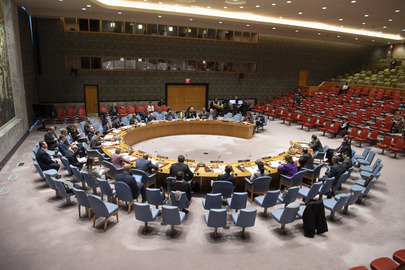
At the end of last month, Mr. Salih – who is a former Kurdish politician and President of Iraq – told the Security Council that the situation for refugees today was “genuinely, truly, inhumane”.
UNHCR was created after the Second World War with the pledge that people fleeing persecution should be protected and not sent back to places where they might be in danger.
Press freedom comes at a heavy price, says award-winning journalist
Veteran community radio journalist Joseph Vancol was killed in Haiti after being abducted by armed men in Gressier, a community west of the capital, Port au Prince, last month.
His death was the 29th documented killing of a journalist this year, according to the UN agency UNESCO, which lists and condemns all such fatalities, in support of media freedom.
For Mexican journalist Zorayda Gallegos – who has faced threats while doing her job – press freedom is the right to report on serious human rights abuses, in particular sexual violence in the armed forces.
She’s the winner of this year’s prestigious Bridge Valdés Award for Journalism and Human Rights, for her reporting on sexual violence in the military.
Ms. Gallegos maintained that in just a few years, 520 women reported being victims of sexual crimes, and yet convictions were only secured in three per cent of those cases.
Here she is now, explaining the systemic obstacles to justice that women often face:
“What we also find appalling is that in the few cases that actually reach the judicial stage…women are revictimized by judicial officials who issue sexist rulings or demonstrate little to no gender perspective. They might make comments like, ‘If he was raping you, why didn’t you kick him harder to break free?’ Such remarks obviously create an obstacle for the victim and serve to revictimize her.”
You can hear the full interview in Spanish on our multilingual UN News platform, ONU Noticias.
Daniel Johnson, UN News
Source of original article: United Nations (news.un.org). Photo credit: UN. The content of this article does not necessarily reflect the views or opinion of Global Diaspora News (www.globaldiasporanews.com).
To submit your press release: (https://www.globaldiasporanews.com/pr).
To advertise on Global Diaspora News: (www.globaldiasporanews.com/ads).
Sign up to Global Diaspora News newsletter (https://www.globaldiasporanews.com/newsletter/) to start receiving updates and opportunities directly in your email inbox for free.