
UN Secretary-General warns against ‘full resumption of conflict’ following recent escalation in violence
The UN Secretary-General Antonio Guterres on Wednesday, warned against the ‘full resumption of conflict’ in the Middle East following the return of strikes and counter-strikes in recent days between Israel, Iran and the United States.
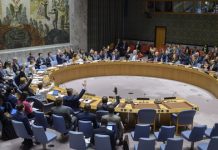
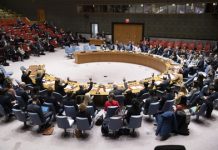
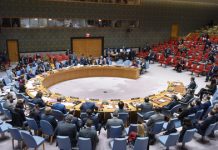
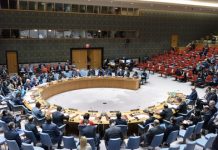
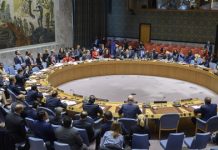
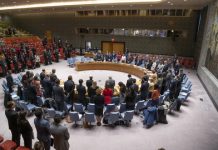
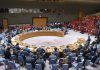
In a statement to the Security Council on Wednesday, Mr Guterres said that the Middle East was being pulled deeper into crisis, with the consequences reaching far beyond the region.
Escalation in the Middle East reverberates across borders and continents. Through political tensions, displacement, and rising insecurity. Through markets and trade routes. Through food and fuel costs. A brutal price is being paid by the region’s people. And it is extending to the wider world, particularly the most vulnerable countries.
Mr Guterres noted the ‘serious escalation’ in Lebanon as Israel intensified its ground operations in the south, resulting in many civilian casualties and displacing millions.
The UN Chief urged all parties to implement the fragile ceasefire agreements.
“No more attacks. No more excuses,” he said.
Meanwhile in the Occupied Palestinian Territory, Mr Guterres said that the situation is rapidly deteriorating as civilians are killed daily, homes and farms demolished, and land confiscated.
Regarding the ceasefire in the Gulf region, Mr Guterres said it was ‘more like a less fire’.
He urged military restraint, and emphasised the hardship placed on countries around the world as energy prices rise and supply chains are disrupted, with developing countries bearing the heaviest impacts.
All Sudanese students must have equal opportunity to sit national exams
Turning to Sudan, where hundreds of thousands of students have been unable to complete crucial annual exams due to years of conflict.
UNICEF Regional Director, Etleva Kadilli, said Sudanese youngsters should be able to sit national examinations safely and fairly, no matter where they are.
For these students, sitting a common national examination offers the opportunity to move forward on equal footing with their peers, ensuring fairness and avoiding divisions that could limit future opportunities.
Ms. Kadilli said that it was essential all children – whether in areas affected by conflict, displacement settings, or more stable locations – have access to the same nationally recognised examinations.
Fragmented certification systems risk creating barriers that outlast the conflict itself – limiting young people’s opportunities long after fighting ends.
She said that education must remain a neutral space and is essential to safeguarding both the rights of Sudanese children today – and their prospects for the future.
Students to launch their countries’ first satellites from space station
Lastly, young university students and engineers in El Salvador and Thailand will launch their country’s first-ever satellite into space.
The students were chosen by the United Nations and Japan’s space agency to build and deploy satellites from the International Space Station.
The UN’s space affairs chief, Aarti Holla-Maini, said the programme matters because “space is increasingly dominated by a handful of players.”
The students from El Salvador’s Key Institute will send up their country’s first university satellite, called CAREY, to study changes in Earth’s magnetic field over Central America.
A team from Thailand’s Chulalongkorn University, meanwhile, will launch a satellite designed to help farmers and scientists monitor water distribution more effectively.
It’s all part of KiboCUBE, a long-running UN programme that gives students and researchers in developing countries a chance to reach space, something once reserved for wealthy nations and their governments.
Since 2015, six countries have sent up their first-ever satellites through the programme: Guatemala, Indonesia, Kenya, Mauritius, Mexico and Moldova. In several cases, that single mission was enough to inspire the creation of a national space agency.
Ed de Bray, UN News
Source of original article: United Nations (news.un.org). Photo credit: UN. The content of this article does not necessarily reflect the views or opinion of Global Diaspora News (www.globaldiasporanews.com).
To submit your press release: (https://www.globaldiasporanews.com/pr).
To advertise on Global Diaspora News: (www.globaldiasporanews.com/ads).
Sign up to Global Diaspora News newsletter (https://www.globaldiasporanews.com/newsletter/) to start receiving updates and opportunities directly in your email inbox for free.