
Key points
- The new plan calls for coordinated investment to ensure countries have a skilled, motivated and adequately supported workforce capable of meeting Africa’s rapidly growing health needs
- The agenda marks a shift from simply training more health workers to building sustainable, well-planned and equitably distributed health systems
- African health ministers also endorsed a new regional strategy to give every child the best possible start in life
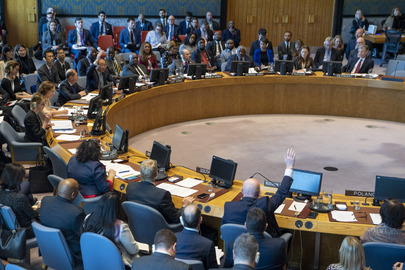
Adopted during the 76th session of the World Health Organization (WHO) Regional Committee for Africa, the Health Workforce Management Programme in Africa (2026–2035) aims to transform health-sector labour markets.
The ministers approved a 10-year programme to train, employ and retain three million additional health workers in a major push to bolster health systems across the continent.
“Our Member States have recognised that training health professionals is only the beginning,” said Dr. Mohamed Yakub Janabi, WHO regional director for Africa.
“This programme turns evidence into concrete action and political commitment into sustainable investments for Africa’s health workforce and, ultimately, for the health and well-being of our populations,”
More health workers, but still not enough
The commitment comes as Africa’s health workforce has grown significantly over the past decade, reaching nearly 5.72 million professionals in 2024.
Yet, the increase remains far short of what is needed. The continent currently has only about 46 per cent of the health workers required to meet its needs, leaving millions of people without adequate access to essential health services.
Without decisive action, the shortfall could exceed six million professionals by 2035.
Chronic staff shortages
At the same time, Africa faces a striking paradox: health facilities are struggling with staff shortages while nearly one million trained health professionals are unemployed, with recent graduates particularly affected.
In many countries, more than half of newly qualified nurses, doctors and midwives are unable to find work shortly after completing their training.
For WHO, the situation underscores the need to better align education and training with labour-market demand, job creation and sustainable financing, while strengthening long-term workforce planning.
Small investment, potentially big returns
The new programme provides countries with a roadmap to improve workforce planning, expand quality training, create more employment opportunities and retain skilled professionals in the areas where they are most needed.
WHO also highlights the economic case for investing in health workers. Closing Africa’s workforce gap would require an additional $4 to $6 per person each year.
The potential returns, however, are substantial. Every dollar invested in health workers could generate up to $10 in economic benefits and roughly 30 times that amount in broader social returns, through better health, higher productivity and stronger economies.
New regional strategy
Deliberations on the policies and priorities are expected at the Addis Ababa meeting through 28 August, with decisions shaping the region’s health agenda in the coming year and beyond, including a newly endorsed regional strategy to give every child the best possible start in life.
The strategy calls for coordinated action across health, nutrition, social protection, water and sanitation, education, finance and other sectors, recognising that no single sector can meet the needs of children alone.
At its heart is a commitment to supporting parents, caregivers and communities, who play the most important role in helping children survive, grow, learn and thrive, according to WHO.
Follow the African health ministers’ meeting here.
Source of original article: United Nations (news.un.org). Photo credit: UN. The content of this article does not necessarily reflect the views or opinion of Global Diaspora News (www.globaldiasporanews.net).
To submit your press release: (https://www.globaldiasporanews.com/pr).
To advertise on Global Diaspora News: (www.globaldiasporanews.com/ads).
Sign up to Global Diaspora News newsletter (https://www.globaldiasporanews.com/newsletter/) to start receiving updates and opportunities directly in your email inbox for free.