
That is the thinking behind a proposal gaining support from world leaders and experts to establish a new ‘International Panel on Inequality’, an independent body that would bring together evidence on the causes and consequences of widening disparities and help governments understand what can be done about them.
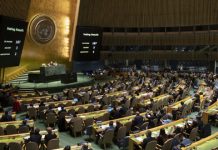
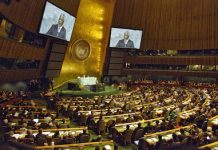
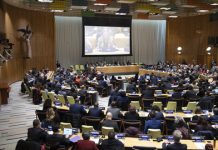
The initiative was in the spotlight in New York on 23 September, at an event on the margins of the UN General Assembly’s high-level week, convened by Brazil, Norway, South Africa and Spain.
In remarks delivered by Deputy Secretary-General Amina Mohammed, UN Secretary-General António Guterres cast the challenge in stark terms, warning of deepening concentrations of wealth and power and the risks they pose to societies and the international system.
“Sustainable Development Goal 10 calls on us to reduce inequality within and among nations. And yet we see breathtaking levels of income and wealth inequality, with the richest 10 per cent of the world’s population now owning 75 per cent of all wealth,” Mr. Guterres said.
When technology widens the divide
For the Secretary-General, the concern is not simply the scale of inequality today, but how quickly it could deepen.
He warned that the rapid development of frontier technologies could make existing disparities considerably worse, particularly if their wealth and power remain concentrated in only a few hands.
“The breakneck emergence of frontier technology – and the concentration of this technology’s wealth and power in a tiny number of hands – could unleash global inequality at a scale far beyond anything that we have seen,” he said.
The consequences, he warned, reach beyond household incomes and individual opportunity. Unchecked inequality could undermine democratic institutions and deepen the imbalance of power between countries.
“A world where only a few powerful countries can exert control over global security and the global economic architecture is a ticking time bomb,” he said.
An IPCC for inequality?
According to the UN chief, the proposed International Panel on Inequality would seek to place independent, science-based evidence at the heart of the global response.
It would bring together experts to analyse the scale, causes and consequences of inequality and identify practical policy choices available to governments.
Those options could include greater investment in education, health, social protection and decent work; fairer taxation; stronger international cooperation on development finance, trade and investment; reform of the global financial architecture; and more effective enforcement of rules governing corporations and high-net-worth individuals operating across borders.
Gender equality would be central to the Panel’s work, alongside efforts to ensure that technologies such as artificial intelligence are accessible to, and governed by, all countries.
“This proposed Panel can deepen our understanding of the problem – and the policy and political choices that we need to address it,” the Secretary-General said.
‘A collective threat’
Nobel laureate economist Joseph Stiglitz, who chairs the founding committee behind the initiative, argued that inequality should be treated as a global challenge requiring the same depth of scientific analysis that climate change has received.
“Inequality within and between nations is a collective threat to the functioning of our economies and their ability to support human dignity,” he said, stressing that its effects extend well beyond economics to politics, societies and the environment.
The model is the Intergovernmental Panel on Climate Change, or IPCC, which provides the comparison at the heart of the initiative.
Mr. Stiglitz said the proposed inequality panel would similarly provide an independent body of experts able to “assess, synthesize, and present trusted knowledge and analysis” on the causes and consequences of inequality and possible policy responses.
But he also stressed the importance of giving such a body a multilateral foundation and legitimacy. The founding committee, he said, supports establishing the Panel through a UN resolution.
From proposal to UN resolution
Barbados Prime Minister Mia Mottley gave the proposal strong backing at the meeting, looking ahead to the possibility of action by the General Assembly.
For Ms. Mottley, tackling inequality goes to the heart of whether the international community can fulfil the promises made to people through the United Nations.
“I’d like to thank Brazil, Norway, South Africa, and Spain for convening this session that allows us to be able to tee up a resolution that I suspect will become a groundbreaking resolution for this body, recognizing that if we want to be able to guarantee the promise of the UN charter to our citizens across the world, it will be impossible for us to do without ensuring that we address this fundamental issue of income inequality,” said Ms. Mottley.