
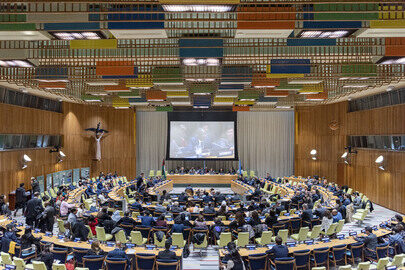
Protecting Haiti’s children is crucial for its democratic future, Security Council hears
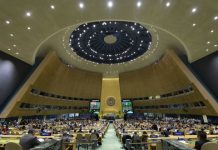
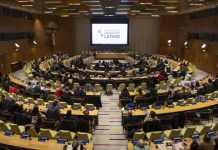
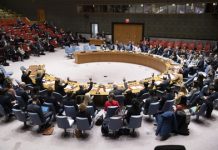
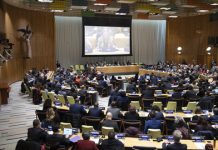
A peaceful future for the people of Haiti depends on ending gang violence and providing “viable alternatives”, the Security Council heard on Monday.
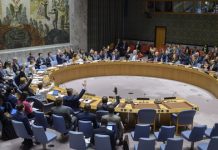
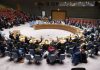
Addressing the 15-member body at UN Headquarters in New York, top UN official in Haiti, Carlos Ruiz Massieu, stressed that internationally-supported security operations alone “will not produce lasting peace” in the Caribbean island nation after decades of instability.
He stressed the need to strengthen justice and state institutions too. And to ensure that there’s work opportunities, especially for vulnerable women and children:
“Haiti’s children are at a grave risk. Alarmingly, as many as one in every two gang members today is a child. Children are being exploited, coerced into violence and deprived of the opportunity to build a future. Averting a lost generation must therefore be at the heart of Haiti’s stabilization and recovery efforts.”
Mr. Massieu noted that the UN has developed practical options to support a national arms amnesty programme, alongside initiatives to strengthen justice, accountability and oversight.
He added that the creation of two specialized judicial units for serious crimes marked an important step towards delivering justice for victims and breaking the cycle of violence and impunity.
Their success will depend on “adequate resources”, the protection of judicial personnel and sustained international support, Mr. Massieu stressed.
Middle East war once again leaves civilians facing repeated strikes
After further deadly exchanges of fire between the United States and Iran, the World Health Organization (WHO) highlighted the heavy toll on civilians across the Middle East, who face the “fear and uncertainty of repeated strikes”.
And as oil prices jumped once again over the weekend, UN economists reiterated that volatility is likely to remain high.
The UN Economic Commission for Europe also insisted that supply disruptions will continue for months – even if the situation normalizes rapidly. “Strategic oil reserves are also at their lowest levels for decades,” the agency stressed.
In Iran, the health authorities have reported that 50 people have been killed and more than 500 injured this month, with five women and two children among the dead, and dozens more injured.
WHO Regional Director, Dr Hanan Balkhy, also cited a reported strike on a water desalination plant in Hormozgan province in Iran that has disrupted the supply of safe drinking water for thousands of people.
Dr. Balkhy also highlighted explosions near Baqaei Reference Hospital earlier this week that led to the evacuation of children receiving cancer treatment.
In Qatar, the UN health agency said that falling shrapnel had injured five civilians, including a child.
Civilians have also been injured in Bahrain where fuel depots have been targeted.
Kuwait reported injuries and “significant material damage” following a strike on an oil facility, Dr. Balkhy said, adding that several power generation units have been deactivated after strikes on power and water desalination plants.
Moon Day focuses growing concerns around space junk
As space and moon exploration surges, the UN on Monday urged governments to ensure that plans to return to the lunar surface do not come at the expense of planet Earth.
“Decades of rapidly expanding space activity have shown that each launch leaves an environmental footprint…This is why it is so crucial to consider the sustainability of these programmes early on,” said Jason Jabbour, Senior Officer at the UN Environment Programme (UNEP).
Although international agreements are in place to avoid contaminating outer space, UNEP noted that an estimated 140 million pieces of debris larger than one millimetre now orbit Earth.
Most of these are too small to track but they remain capable of damaging satellites and spacecraft, the agency said, in a call to raise awareness about the environmental challenges of a new era of space exploration, to mark International Moon Day, that’s celebrated on 20 July.
When old satellites eventually re-enter Earth’s atmosphere, UNEP said that they release metals such as aluminium, lithium and copper. Scientists are studying whether these materials could affect atmospheric chemistry, cloud formation and the ozone layer.
Detachable rocket sections also contribute to the problem, as some remain in orbit for years before breaking apart or falling back to Earth, while others fragment into thousands of pieces.
Daniel Johnson, UN News.
Source of original article: United Nations (news.un.org). Photo credit: UN. The content of this article does not necessarily reflect the views or opinion of Global Diaspora News (www.globaldiasporanews.com).
To submit your press release: (https://www.globaldiasporanews.com/pr).
To advertise on Global Diaspora News: (www.globaldiasporanews.com/ads).
Sign up to Global Diaspora News newsletter (https://www.globaldiasporanews.com/newsletter/) to start receiving updates and opportunities directly in your email inbox for free.