
Iran crisis: Nuclear watchdog urges restraint amid ongoing strikes
As the violent escalation in the Middle East entered a third day on Monday, the head of the UN atomic energy agency urged a return to diplomacy, warning of the “increasing risk to (regional) nuclear safety”.
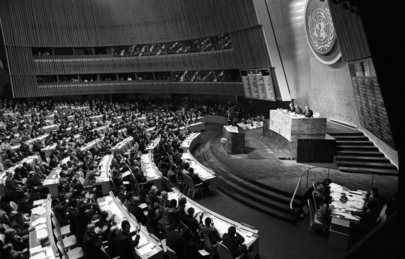
In a special session requested by Russia, Rafael Grossi said that there was no indication that any of Iran’s nuclear installations had been damaged by Israeli and U.S. strikes.
“So far, no elevation of radiation levels above the usual background levels has been detected in countries bordering Iran… Efforts to contact the Iranian nuclear regulatory authorities through the IEC continue, with no response so far. We hope this indispensable channel of communication can be reestablished as soon as possible.”
Meanwhile, at the UN Human Rights Council in Geneva, many Gulf States condemned Iranian attacks reported in Bahrain, Oman, Jordan, Kuwait, Qatar, Saudi Arabia and the United Arab Emirates (UAE).
Israel has also been targeted and nine people have been reportedly killed in missile strikes. On Monday the Israeli military responded to Hezbollah attacks launched from Lebanon, where the health ministry reported over 30 deaths in Beirut and southern areas.
In Iran, there are indications that 550 civilians have been killed since the country came under attack on Saturday.
Condemnation for Strait of Hormuz shipping attacks
In related news, the head of the UN maritime agency has condemned attacks on shipping in the strategic Strait of Hormuz.
Arsenio Dominguez expressed deep concern that one seafarer had died and several others were injured by strikes impacting three ships at the weekend.
“These crews are simply doing their jobs and must be protected from the effects of wider geopolitical tensions,” Mr. Dominguez insisted, as Secretary-General of the International Maritime Organization.
He appealed to shipping companies to avoid sailing through the affected region “until conditions improve”. Several major shipping lines have reportedly done so already.
The Strait of Hormuz is located off the coast of southern Iran and is a key transit route for about 20 per cent of the world’s oil and gas.
Afghanistan’s quake victims mustn’t be forgotten, says UN aid office
To Afghanistan, finally, where the survivors of a massive and deadly earthquake six months ago are still in desperate need of help.
In an alert – amid tensions and deadly clashes between Kabul and Pakistan – the UN aid coordination office, OCHA, said that around nine in 10 families affected by the deadly quake in eastern Afghanistan still live in temporary and inadequate shelters.
The UN is providing relief to many, but sustained funding is essential to support recovery, said OCHA’s Said Alam Khan, from Mazar Dara emergency aid hub in Kunar province:
“Children still lack access to formal learning spaces; access to clean water, health care services, livelihood and sustainable solutions remain key challenges.”
Around 2,200 people were killed when a magnitude six earthquake struck eastern Afghanistan on 31 August 2025, devastating Kunar, Nangarhar and Laghman provinces.
OCHA’s Mr. Khan said that as winter continues, international solidarity and financial support remain essential; this will help address people’s immediate needs, but also enable early recovery and long-term resilience.
Daniel Johnson, UN News
Source of original article: United Nations (news.un.org). Photo credit: UN. The content of this article does not necessarily reflect the views or opinion of Global Diaspora News (www.globaldiasporanews.com).
To submit your press release: (https://www.globaldiasporanews.com/pr).
To advertise on Global Diaspora News: (www.globaldiasporanews.com/ads).
Sign up to Global Diaspora News newsletter (https://www.globaldiasporanews.com/newsletter/) to start receiving updates and opportunities directly in your email inbox for free.