
“Despite intensified diplomatic efforts during the second half of 2025, there was no agreement on the way forward regarding the Iran nuclear programme,” concluded the UN’s chief diplomat, Rosemary DiCarlo.
Ms. DiCarlo – the UN Under-Secretary-General for Political and Peacebuilding Affairs – reminded the Council that the best option for the international community is a negotiated settlement that would ensure a peaceful Iranian nuclear programme and provide sanctions relief.
At the heart of the split between the Security Council members is a dispute over the legitimacy of holding meetings related to the 2015 Iran nuclear deal, formally the Joint Comprehensive Plan of Action (JCPOA), an agreement to limit Iran’s nuclear programme in return for sanctions relief.
Iran signed the agreement alongside the Council’s five permanent members – China, France, Russia, United Kingdom, United States – plus Germany and the European Union (EU).
First post ‘snapback’ meeting
Tuesday’s meeting was the first to take place since France, Germany and the United Kingdom triggered the so-called “snapback mechanism,” (the reimposition of sanctions against Iran), citing “significant non-performance” of its commitments under the plan.
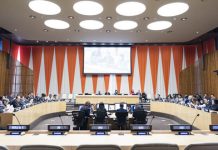
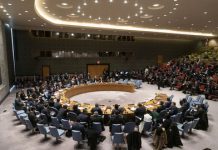
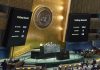
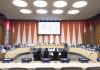
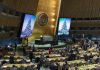
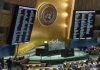
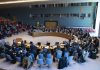
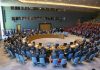
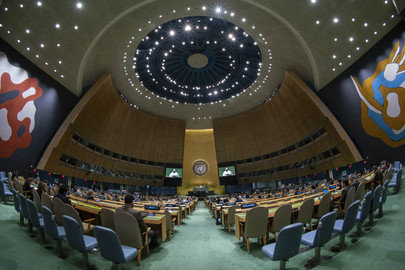
UN Security Council meeting on non-proliferation (23 Dec 2025)
The United States, United Kingdom, France and other Security Council members argued that the Resolution that led to the Nuclear Deal remains in force and that the Council should therefore continue meeting to discuss the nuclear non-proliferation issue.
“The lack of implementation by Iran of its international obligations related to its nuclear programme constitute a grave threat to international peace and security,” said Jay Dharmadhikari, France’s Deputy Permanent Representative to the UN. He added that, if brought to military enrichment levels, Iran’s stockpile “would be of a sufficient quantity to produce 10 nuclear explosive devices”.
Iran: ‘No mandate’ for Security Council non-proliferation discussions
Russia’s delegate, Permanent Representative Vassily Nebenzia, took aim at the Slovenian presidency of the Council, regretting that they did not “find the courage to impartially uphold your obligation not to act at the behest of those who insisted on holding a Security Council meeting on a non-existent agenda item”.
“The JCPOA Committee does not exist anymore,” he added. “Therefore, the EU is not the coordinator anymore and therefore should not be allowed to brief the UN Security Council”.
Speaking for Iran, Ambassador Amir-Saeid Iravani insisted that Resolution 2231 (2015) expired on 18 October 2025, and thus “ceased to have any legal effect or operative mandate”. He concluded that there is “no mandate for the Secretary-General to submit any report and no mandate for the Council to hold discussions on it”.
Today, he said, the Council is witnessing “a calculated distortion” of the resolution and the “deliberate dissemination of disinformation” about Iran’s nuclear programme.
The representative of the European Union, Deputy Head of Delegation Hedda Samson, speaking as an observer, took a different view. “The snapback of sanctions and nuclear restrictions must not be the end of diplomacy — quite the opposite”, she stressed, calling on Iran to provide the International Atomic Energy Agency (IAEA) with updated and verifiable declarations on the quantity and whereabouts of nuclear material and related activities.
Source of original article: United Nations (news.un.org). Photo credit: UN. The content of this article does not necessarily reflect the views or opinion of Global Diaspora News (www.globaldiasporanews.com).
To submit your press release: (https://www.globaldiasporanews.com/pr).
To advertise on Global Diaspora News: (www.globaldiasporanews.com/ads).
Sign up to Global Diaspora News newsletter (https://www.globaldiasporanews.com/newsletter/) to start receiving updates and opportunities directly in your email inbox for free.