
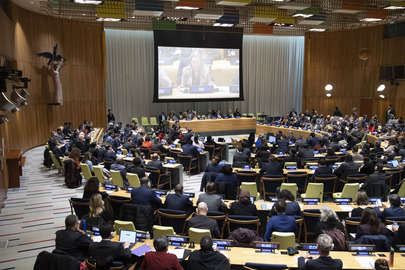
The sporting icon wasn’t there to talk tactics, but to lead his lifelong club, Flamengo, into a global pact to tackle some of the planet’s biggest challenges.
Through an initiative called Football for the Goals, the UN is tapping into the sport’s massive cultural influence to promote human rights, environmental sustainability, and social equality.
A legendary partnership
Zico, a veteran of three World Cups and a hero to millions of fans worldwide, was named the first Brazilian Champion for the programme.
His role is simple but ambitious: use his status to inspire fans to think about the world beyond the pitch.
Zico told our UN News Portuguese team in an interview on Monday, that to be at the UN for the initiative was “a moment of great honor and much satisfaction that represents all my dedication, my career, and the way I conduct the profession I chose.”
He added that it was important to him to be representing the sport and the players on the pitch: “It is not a personal tribute, but rather a tribute to football itself, and what it represents.”
While the UN often deals with complex policy and strategy, this partnership is about making global goals feel local.
By bringing a club with the massive reach of Flamengo on board, the UN hopes to turn match-day passion into real-world action.
Generation Amazing has partnered with the United Nations since 2020 and is part of the UN initiative known as “Football for the Sustainable Development Goals.”
More than just a game
For those who don’t scour the league tables, the scale of this collaboration is significant. Flamengo isn’t just a sports team; it is a cultural institution with tens of millions of supporters.
“Flamengo’s decision to join Football for the Goals underscores the power of football in South America, especially in Brazil, to drive social progress and inspire collective action,” noted Melissa Fleming, the UN’s head of global communications.
“By bringing one of the world’s most influential clubs into this global initiative, we are strengthening a movement that connects the passion of the game with the urgent need to advance the Sustainable Development Goals and build a more just, inclusive and sustainable world for all.”
A goal for 2030
The goals in question aren’t the ones found at the back of a net. They refer to the Sustainable Development Goals – the ambitious 17-point plan agreed upon by world leaders to end poverty and protect the environment by 2030.
By joining the movement, Flamengo has pledged to:
- Go green: Implement more sustainable practices in how the club is run.
- Speak up: Use its massive social media presence to advocate for equality and human rights.
- Lead by example: Show fans and athletes alike how small changes in daily life can contribute to a healthier planet.
Why football?
The UN recognizes that football – or soccer as the US would have it – is the most global and accessible sport in the world. From dusty community pitches to gleaming international stadiums, it speaks a language everyone understands.
With icons like Zico leading the charge, the hope is that the same energy fans use to cheer on their team can be harnessed to protect the world they live in.
Source of original article: United Nations (news.un.org). Photo credit: UN. The content of this article does not necessarily reflect the views or opinion of Global Diaspora News (www.GlobalDiasporaNews.com).
To submit your press release: (https://www.GlobalDiasporaNews.com/pr).
To advertise on Global Diaspora News: (www.GlobalDiasporaNews.com/ads).
Sign up to Global Diaspora News newsletter (https://www.GlobalDiasporaNews.com/newsletter/) to start receiving updates and opportunities directly in your email inbox for free.