
Ukraine: danger is only increasing, warns UN human rights office
Russia’s full-scale invasion of Ukraine began more than four years ago, but the “danger is only increasing”, particularly from deadly attack drones, the Human Rights Council has heard.
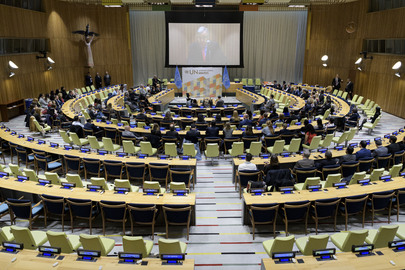
In an update to the Council, top UN human rights official Nada Al-Nashif said on Thursday that in the first two months of this year, 60 per cent of all civilian casualties were in frontline regions and almost half of those killed were elderly.
The leading cause of death and injury was “attacks involving short-range drones” in both Ukrainian Government-controlled areas and territory occupied by Russia, said UN Deputy High Commissioner for Human Rights, Ms. Al-Nashif:
“At least 580 civilians were killed and 3,000 injured in such attacks last year. In just the first two months of this year, 107 civilians were killed and 430 injured. So, the casualty rate has more than doubled. Ninety-five per cent of casualties resulting from short-range drones were in Government-controlled territory of Ukraine.”
Danger is ever-present in frontline areas occupied by Russia too, Ms. Al-Nashif warned, including in Oleshky district in Kherson region, where residents face frequent drone attacks.
“Together with landmines along roads…evacuation (is) extremely difficult and dangerous, leaving many people trapped close to the frontline,” the Deputy High Commissioner said, while highlighting food shortages and other critical humanitarian needs.
Haiti’s ‘vortex of violence’ now at disastrous levels
Staying with the Human Rights Council, which also examined the spiralling crisis in Haiti, as gangs starve and extort the Caribbean island’s people, the UN says.
Data from the UN human rights office, OHCHR, shows that at least 5,500 people were killed and 2,600 injured in gang-related violence between 1 March 2025 and 15 January 2026.
In an update on Thursday, the Council heard that 65 per cent of these casualties happened during operations by security forces against gang members. More than one in five victims – including children – were struck by stray bullets in their homes or on the street.
Latest indications are that gangs control most of the capital, Port-au-Prince, and they are expanding into its outskirts and moving north, into the Artibonite and Centre departments.
The emergency is “fuelled by weapons”, said Deputy High Commissioner, Ms. Al-Nashif, who described a “vortex of violence” and urged all governments to implement the Security Council’s arms embargo in full and stop firearms and ammunition reaching Haiti.
Gangs “kill, kidnap, beat and burn the bodies of anyone who gets in their way. This includes people who resist extortion and those they perceived as collaborating with the police,” Ms. Al-Nashif said.
She highlighted disturbing evidence that gangs coerce children into committing targeted killings, sexual violence and kidnapping, as well as monitoring security forces and collecting extortion payments.
The violence has internally displaced more than one million people; thousands more have been uprooted in recent weeks.
Cuba blockade having major impact on healthcare warns WHO’s Tedros
Finally, to Cuba, where hospitals are just the latest vital public services to be hit, more than a month since Washington took measures to block oil supplies from entering the Caribbean nation.
In an alert, the UN World Health Organization, WHO, warned that Cuban hospitals have been struggling to maintain emergency and intensive care services.
“Thousands of surgeries have been postponed during the last month and people needing care…have been put at risk” from the lack of available power for medical equipment, said WHO Director-General, Tedros Adhanom Ghebreyesus.
He insisted that “health should be protected at all costs and never be at the mercies of geopolitics, energy blockades and power outages”.
This latest crisis for Cuba follows Hurricane Melissa last October, which affected more than 2.2 million people across the island nation.
Daniel Johnson, UN News
Source of original article: United Nations (news.un.org). Photo credit: UN. The content of this article does not necessarily reflect the views or opinion of Global Diaspora News (www.globaldiasporanews.com).
To submit your press release: (https://www.globaldiasporanews.com/pr).
To advertise on Global Diaspora News: (www.globaldiasporanews.com/ads).
Sign up to Global Diaspora News newsletter (https://www.globaldiasporanews.com/newsletter/) to start receiving updates and opportunities directly in your email inbox for free.