
DR Congo Ebola outbreak records more than 3,700 deaths
One hundred and 31 days into the Ebola outbreak in the Democratic Republic of the Congo, health experts said that response efforts have scaled up and “the first encouraging signs of progress” are being seen.
In an update, the UN World Health Organization (WHO) said that in the last 21 days, cases of infection fell by around 26 per cent in Ituri province.
But North Kivu province recorded a 73 per cent increase, clearly indicating that this Ebola outbreak is spreading in a dangerously uneven way across the seven affected provinces where it has been confirmed.
Here’s WHO Regional Emergency Director for Africa, Dr. Marie Roseline Belizaire:
“While cases and deaths are declining in some provinces, they continue to rise in orders. Those patterns show the outbreak are still not under control and remain spread across a wide geographic area. One of our greatest concerns is that too many people are still dying before reaching treatment.”
Since the start of the outbreak, more than 7,700 cases of Ebola Bundibugyo virus have been confirmed and over 3,700 people have died.
Dr. Belizaire explained that around one in three new cases of Ebola infection are only identified after people have died outside treatment centres, in their community.
And although adults account for most confirmed cases of infection, children under five have the highest fatality rate, at more than 60 per cent, compared with approximately 40 per cent for adults.
Hunger and malnutrition fears in Somalia: WFP
To Somalia, where millions of people face high levels of hunger and acute child malnutrition is set to worsen over the coming months.
That’s the warning from the UN World Food Programme, WFP, prompted by anticipated heavy flooding caused by the super El Niño that’s expected to worsen from October to December.
The people of the East African nation have faced decades of acute hunger and periodic famine.
According to UN-backed food insecurity experts, 5.4 million people are expected to face crisis levels of hunger or worse over the next three months.
This includes 1.5 million facing emergency levels of hunger or worse.
In addition, more than 1.9 million children under five will require treatment for acute malnutrition until next June, including 433,000 with severe acute malnutrition, which is the deadliest form.
Over 60 per cent of Somalia’s hunger crisis is concentrated among rural populations. Internally displaced people in Belet Weyne and some living in displacement sites in Baidoa, are projected to reach “extremely critical” levels of malnutrition, as anticipated flooding disrupts access to services.
Indigenous women and girls subjected to forced sterilisation
The Human Rights Council on Wednesday highlighted the plight of Indigenous women and girls forcibly sterilised or sexually abused by those seeking to erase their cultural traditions.
Addressing the forum in Geneva, the Special Rapporteur on the rights of Indigenous Peoples, Albert Barume, described how the bodies of indigenous women and girls have been a frequent target for those also seeking to take their land and territory:
“Forced sterilisation or contraception, the enforcement of mandatory boarding schools rife with sexual violence, the demonization or outright criminalisation of Indigenous midwifery traditions, and severe acts of sexual violence aimed at instilling fear in entire communities exemplify the historical violations of the Indigenous women’s reproductive rights that persisted for decades across diverse regions and countries.”
It is 20 years since the UN Declaration on the Rights of Indigenous Peoples draft text was adopted at the Human Rights Council; its objective is to establish a universal framework of minimum standards for the survival, dignity, and well-being of Indigenous peoples worldwide.
Mr. Barume noted that there are many drivers of abuse of Indigenous women and girls today, from environmental pollution such as the contamination of land, water and air, including by mining companies.
The Special Rapporteur, who reports to the Council in an independent capacity, maintained that conservation initiatives have also resulted in violations of the reproductive rights of Indigenous women and girls.
Daniel Johnson, UN News
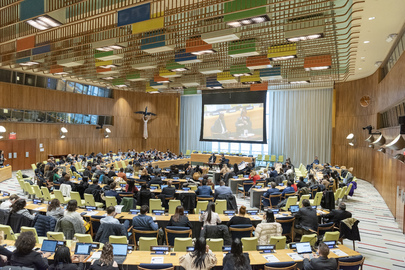
And that’s the bulletin…and as the second day of the General Debate and high-level meetings get underway at UN Headquarters, if you want to know all the latest developments, go to our website, at news.un.org. Or follow us online, search for UN News.
Source of original article: United Nations (news.un.org). Photo credit: UN. The content of this article does not necessarily reflect the views or opinion of Global Diaspora News (www.globaldiasporanews.com).
To submit your press release: (https://www.globaldiasporanews.com/pr).
To advertise on Global Diaspora News: (www.globaldiasporanews.com/ads).
Sign up to Global Diaspora News newsletter (https://www.globaldiasporanews.com/newsletter/) to start receiving updates and opportunities directly in your email inbox for free.