
Guterres urges greater AI regulation in global call at Barbados summit
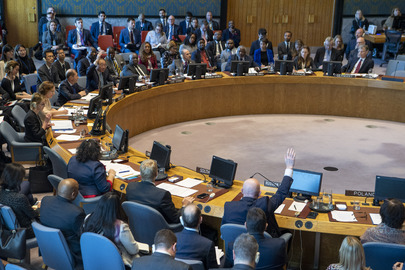
We start with AI news and an urgent appeal from UN chief António Guterres that far more needs to be done to stop the revolutionary tech from causing harm.
The Secretary-General was speaking in Barbados at the Bridgetown Special Summit on AI Safety.
He said that although AI systems can do much good, from strengthening health systems to accelerating scientific breakthroughs, the risks from unchecked platforms “are growing just as fast” – amid global IT outages and cyber break-ins targeting supermarket freezers across Europe.
“The dangers are clear. Technology without accountability. Capability without safeguards. And power without responsibility. The ability of countries to manage these risks remains deeply unequal. We cannot allow AI to replicate – and deepen – global inequalities. Solutions must be as borderless as the risks we face.”
Mr. Guterres stressed that the summit could help strengthen national approaches to AI security and development.
But every country needed to have the capacity to test and develop an AI system best suited to them, the UN chief insisted.
His comments echoed the latest report of the UN-backed Independent International Scientific Panel on AI, which highlighted the value of nations testing platforms in their own language, to show where “they fall short or are unsafe”.
Libya: UN mission urges probe into Benghazi port attacks
The UN Support Mission in Libya (UNSMIL) has called for an independent investigation into attacks carried out at Benghazi port that sank a Russian warship on Sunday.
Ukrainian President Volodlymyr Zelenskyy said on X that his intelligence services had launched the strikes using seven underwater drones. A commercial vessel was also hit in a separate incident.
In a statement, UNSMIL stressed that Libya’s sovereignty, territorial integrity and the security of its citizens and assets must be fully respected.
The North African country has been in political crisis since the fall of the Muammar Gaddafi regime in 2011; it remains divided between the internationally recognised Government of National Unity in the capital, Tripoli, and a rival administration based in Benghazi, backed by the House of Representatives and military general Khalifa Haftar’s Libyan National Army.
The UN mission warned against actions or rhetoric that could fuel tensions within Libya or draw the country into wider regional or international confrontations.
“Libya cannot afford, and must not become, a battleground for foreign conflicts,” it said, noting that the attacks highlighted the need to reunify Libya and protect the country’s national sovereignty and security.
Heavy fighting in Ituri disrupts DR Congo Ebola response – WHO
Heavy fighting near a hospital in Ituri province in the Democratic Republic of the Congo has disrupted the vital work of Ebola responders and trapped emergency teams in a maternity ward.
That’s the latest from the head of the World Health Organization (WHO), which is one of several UN agencies on the ground, trying to stop the deadly disease spreading.
WHO chief Tedros Adhanom Ghebreyesus, said on X on Sunday that agency staff and Ebola responders had been forced to shelter “for their lives” in a maternity ward of the hospital.
He said that the agency was working with partners to evacuate trapped staff safely and called for their “immediate safe passage and for the hospital facilities, staff and patients to be protected”.
WHO has warned repeatedly that rising insecurity in eastern DRC is one of the main obstacles to containing the virus, with attacks on civilians and health workers hampering response efforts.
Ituri province remains the epicentre of the outbreak of Ebola disease caused by Bundibugyo virus and accounts for more than two-thirds of confirmed cases.
Latest data indicates more than 11,700 confirmed infections, including 5,775 deaths, across eight provinces of DRC.
Daniel Johnson, UN News
Source of original article: United Nations (news.un.org). Photo credit: UN. The content of this article does not necessarily reflect the views or opinion of Global Diaspora News (www.globaldiasporanews.com).
To submit your press release: (https://www.globaldiasporanews.com/pr).
To advertise on Global Diaspora News: (www.globaldiasporanews.com/ads).
Sign up to Global Diaspora News newsletter (https://www.globaldiasporanews.com/newsletter/) to start receiving updates and opportunities directly in your email inbox for free.