
It’s high time to end the Middle East war, Guterres warns
UN Secretary-General António Guterres has renewed his call for an immediate end to the war in the Middle East sparked by the bombing of Iran by the US and Israel followed by counterstrikes from Tehran, warning that it risks intensifying far beyond the region.
Speaking to reporters, the UN chief delivered a direct appeal to Washington and Tel Aviv:
“It’s high time to end this war that is risking to get completely out of control, causing immense suffering on civilians and with propagation around the global economy, that is really dramatic with potential tragic consequences, especially for the least developed countries.”
Mr. Guterres also had a strong message for Iran, urging it to stop attacking neighbouring countries in the Gulf that have played no direct role in the conflict.
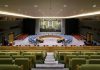
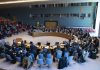
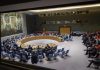
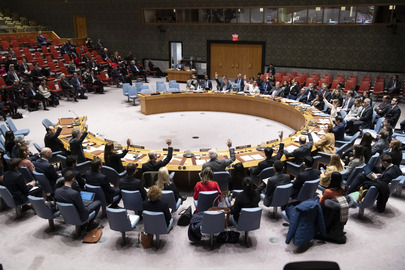
He noted that the Security Council has condemned those attacks, demanding that they stop, while also calling for the reopening of the Strait of Hormuz.
The Secretary-General warned that the continued closure of the key shipping route is causing enormous hardship for people around the world who have no connection to the fighting.
He insisted that “the force of law” must prevail over “the law of force”, and said diplomacy must now replace war.
Human rights defenders in Colombia face persistent deadly violence
Meanwhile in Colombia, human rights defenders have faced relentless violence over the past decade, with nearly 100 killed on average each year, according to a new report from the UN human rights office.
High Commissioner Volker Türk said it was “heartbreaking” that it remains one of the world’s deadliest countries for those defending human rights.
He acknowledged efforts by the current Government, including dialogue with civil society and work on a national protection policy, but warned that far more is needed.
The report says that between 2016 and 2025, the UN documented 972 killings of rights defenders. From 2022 to 2025 alone, 410 were killed, while more than 2,000 threats and attacks were recorded.
It links the violence to the continued presence of non-state armed groups, criminal networks involved in drug trafficking, illegal mining and logging, and weak State institutions.
More than 70 per cent of perpetrators were believed to be tied to armed groups.
Indigenous defenders were disproportionately affected, accounting for 23 per cent of victims, despite making up less than five per cent of Colombia’s population.
The UN is urging reforms to strengthen prevention, protection and criminal investigations.
Gender inequality deepens global water crisis, UN report warns
A new UN report released on Thursday warns that the global water crisis is being made worse by deep-rooted gender inequality.
The study finds that women and girls continue to shoulder the greatest burden when access to safe water is limited.
Across the world, women are responsible for collecting water in more than 70 per cent of rural households without a reliable supply, the report published ahead of World Water Day, found.
Altogether, women and girls spend an estimated 250 million hours every day fetching water. That is time they are prevented from going to school, paid work and other opportunities.
The report also highlights the impact of poor sanitation. In many places, women and girls still lack access to safe toilets and menstrual hygiene facilities.
Ed de Bray, UN News
Source of original article: United Nations (news.un.org). Photo credit: UN. The content of this article does not necessarily reflect the views or opinion of Global Diaspora News (www.globaldiasporanews.com).
To submit your press release: (https://www.globaldiasporanews.com/pr).
To advertise on Global Diaspora News: (www.globaldiasporanews.com/ads).
Sign up to Global Diaspora News newsletter (https://www.globaldiasporanews.com/newsletter/) to start receiving updates and opportunities directly in your email inbox for free.