

Yemen: Türk alarmed by civilian casualties as hostilities escalate, urges restraint
We start in Yemen, where the escalating conflict continues to kill and injure an increasing number of civilian victims, while Houthi – or Ansar Allah – rebels have attacked Saudi Arabia and Red Sea shipping, linked to the Iran-US war.
In an alert on Monday, UN human rights chief Volker Türk warned that at least 17 non-combatants have been reported killed in attacks by the separatists since 6 August. Two people were also injured in opposition-controlled areas late last month.
Four crew members and three port workers were among those killed by Houthi militants on a cargo ship in the Bab el-Mandeb Strait on 11 August and on Mokha port on 9 August, said UN human rights office spokesperson Shabia Mantoo:
“It is critical that all parties abide by international humanitarian and human rights law. They must refrain from attacks against civilians and civilian objects and take all feasible precautions to avoid civilian deaths and injuries, and damage to civilian objects. We urge all parties to halt immediately any actions that risk returning Yemen to full-scale conflict.”
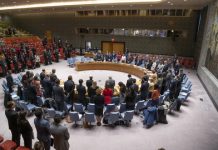
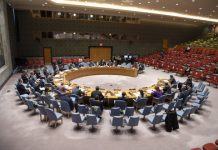
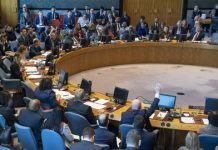
Last week, UN Special Envoy for Yemen, Hans Grundberg, told the Security Council that Houthi attacks on commercial shipping threatened global trade – and the country’s fragile truce, that has largely held since 2022.
Reports indicate that Yemeni government forces carried out nearly 200 attacks on Houthi positions in a 24-hour period, killing and wounding dozens and destroying military equipment and weapons depots.
Since unrest erupted in 2011, Yemen’s political and humanitarian crisis has displaced millions, devastated the economy and left around 20 million people in need of humanitarian assistance.
Ebola outbreak is the largest the DR Congo has ever faced, warns WHO
Ebola virus disease continues to spread in eastern Democratic Republic of the Congo, with latest Government data indicating 2,325 confirmed deaths, making it deadlier even than the 2018–2020 epidemic.
“The outbreak is the largest the country has ever faced, with new cases doubling in some hotspots each week. It is outpacing the response,” the UN World Health Organization (WHO) said on Monday.
The agency stressed that a “major scale-up” was underway “in every aspect of the response”. And WHO said that support is still needed “for all areas of the response”, including surveillance, treatment, field investigation, safe burial teams and community work.
“Responders need safe access to communities, and the resources to end this outbreak and save lives,” the health agency said.
Since the latest outbreak was declared in mid-May in eastern DR Congo, almost 5,000 confirmed cases of infection due to the Ebola Bundibugyo species have been recorded.
Today, demobilized former rebel fighters are taking part in the response. The initiative is supported by the UN peacekeeping mission there, MONUSCO.
After receiving training on prevention measures, the former combatants go out into the community to share lifesaving information such as the need to wash hands regularly and how to detect and report suspect cases to the authorities.
A total of 730 patients remain in isolation or hospital and 1,040 have recovered from the disease.
There is currently no approved vaccine for Ebola Bundibugyo.
Efforts continue to strengthen accord to prevent biological weapons development
We turn now to UN Geneva, where countries are involved in efforts to ensure that biological weapons are not created now or in future, in line with the Convention on Biological Weapons.
The international agreement marked its 50th anniversary last year.
It was the first multilateral disarmament treaty to ban an entire category of weapons of mass destruction.
Although it’s widely accepted that there needs to be a global ban on the development, production, acquisition, transfer, stockpiling and use of biological weapons, the existing Convention lacks a verification system.
Chair of the meeting, Brazil’s Ambassador Federico Meyer, highlighted the “growing risks” and “significant scientific advances” in the field:
“You may have seen the recent reports on the use of artificial intelligence to design new viruses not previously seen in nature. This demonstrates that the convergence of AI in biology is creating new security challenges…The issue for the Convention is that a gap may emerge between these rapidly advancing capabilities and our collective ability to understand, govern and prevent their misuse.
Strengthening the Convention is crucial, its supporters say, citing the rapid development of AI and the interest terrorist groups have expressed in using it to make biological weapons.
The discussions continue this week ahead of a final session in December, when countries will issue their recommendations on measures needed to strengthen the Biological Weapons Convention.
Daniel Johnson, UN News
Source of original article: United Nations (news.un.org). Photo credit: UN. The content of this article does not necessarily reflect the views or opinion of Global Diaspora News (www.globaldiasporanews.com).
To submit your press release: (https://www.globaldiasporanews.com/pr).
To advertise on Global Diaspora News: (www.globaldiasporanews.com/ads).
Sign up to Global Diaspora News newsletter (https://www.globaldiasporanews.com/newsletter/) to start receiving updates and opportunities directly in your email inbox for free.