
Intensifying ISIL threat highlights need for continued counter-terrorism efforts
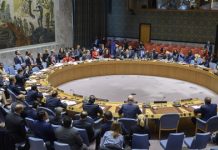
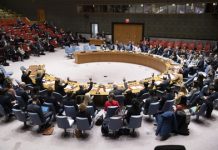
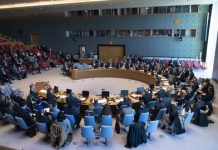
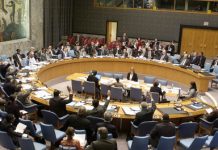
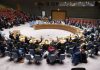
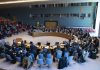
From West Africa to the Middle East and Central Asia, the terrorist group ISIL continues to adapt and demonstrate resilience – despite sustained counter-terrorism efforts, the Security Council heard on Wednesday.
Alexandre Zouev, acting head of the UN Office of Counter-Terrorism, said the threat posed by ISIL, or Da’esh as the group is known in Arabic, has “increased steadily” in the past few months, “remaining multipolar and increasingly complex.”
ISIL and its affiliates continue to recruit foreign terrorist fighters, enhance use of new and emerging technologies, and expand their presence.
The situation in West Africa and the Sahel remains especially urgent, he said, where the ISIL affiliate in the Lake Chad Basin region “has further expanded.”
“In the Middle East, Da’esh remains active in Iraq and the Syrian Arab Republic, with continued attacks and renewed efforts to destabilize local authorities. In the Syrian Arab Republic, the security situation remains fragile, with Da’esh continuing to exploit governance vacuums and incite sectarian tensions.”
WFP halts humanitarian operations in northern South Sudan region
In South Sudan, the UN World Food Programme, WFP, has suspended all humanitarian work in Baliet County, Upper Nile state, following attacks on one of its river convoys and the looting of vital food supplies.
WFP said the decision was taken after a 12-boat convoy carrying more than 1,500 metric tons of lifesaving food assistance was attacked multiple times between 30 January and 1 February.
The convoy was transporting food and non-food items for vulnerable communities when it came under assault by armed youth. The cargo was later looted by local communities at several locations in Baliet County.
WFP said the looting occurred overnight despite security assurances from authorities and without intervention by county officials.
The agency strongly condemned the attacks, stressing that violence against humanitarian workers and assets is unacceptable and undermines efforts to save lives.
WFP also raised concern over escalating insecurity in Jonglei state, where clashes have damaged warehouses and health facilities in several locations.
The insecurity has already forced WFP to halt plans to preposition food ahead of the rainy season, putting critical relief efforts at risk.
Nearly 40 per cent of cancer cases could be prevented, new UN study finds
Up to four in 10 cancer cases globally, are preventable: that’s according to a new analysis from the UN health agency, highlighting measures to reduce risks and save lives.
The study, which was launched this week by WHO and its International Agency for Research on Cancer (IARC), examined 30 areas of causation – including tobacco and alcohol consumption, high body mass index, physical inactivity, air pollution and ultraviolet radiation.
Tobacco is the leading preventable cause of cancer, responsible for 15 per cent of all new cases, followed by infections, and excessive alcohol intake.
Nine cancer-causing infections – such as human papillomavirus (HPV) which can cause cervical cancer – also are included for the first time.
Cancer remains a leading cause of morbidity, responsible for nearly 10 million deaths worldwide in 2020.
If current trends continue, WHO alerts, projections point to a 50 per cent increase in new cases by 2040.
Charlotte Frantz, UN News
Source of original article: United Nations (news.un.org). Photo credit: UN. The content of this article does not necessarily reflect the views or opinion of Global Diaspora News (www.globaldiasporanews.com).
To submit your press release: (https://www.globaldiasporanews.com/pr).
To advertise on Global Diaspora News: (www.globaldiasporanews.com/ads).
Sign up to Global Diaspora News newsletter (https://www.globaldiasporanews.com/newsletter/) to start receiving updates and opportunities directly in your email inbox for free.