
A warning from the top: The world is at a crossroads
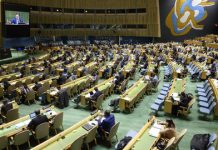
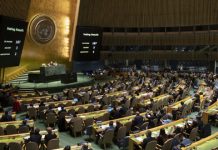
Why it matters: The opening day of UN General Assembly’s annual debate struck a sombre tone, with leaders describing a world increasingly fractured by conflict, rivalry and weakening respect for international law.
- Secretary-General António Guterres warned that global “fault lines” are widening and argued that humanity’s future will depend on how it manages four major challenges: war, inequality, climate change and artificial intelligence.
- In his final address to the Assembly, he urged countries to ensure that “the power of law” prevails over “the law of power”.
- The message from many speakers: today’s crises are exposing weaknesses in the institutions built to prevent them.
Trust in the UN is under pressure
The big picture: Several leaders argued that the credibility of multilateralism now depends less on promises and more on performance.
- General Assembly President Khalilur Rahman said people around the world are no longer asking whether the UN exists, but whether it works.
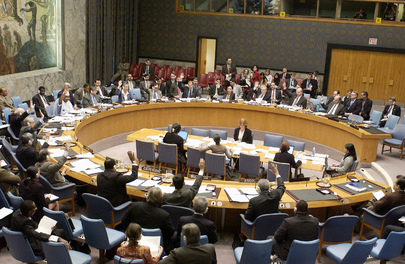
- Calls for reform echoed throughout the day, particularly around the Security Council’s ability to respond effectively to major crises.
- Speakers repeatedly stressed that international law, civilian protection and humanitarian principles must be applied consistently, not selectively.
Security Council reform is back at the centre
What we’re hearing: A growing number of leaders linked today’s geopolitical tensions to international institutions they say no longer reflect current realities.
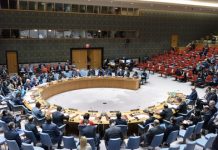
- Reform of the Security Council emerged as one of the clearest themes of the debate.
- Leaders argued that expanding membership is essential to overcoming paralysis and restoring confidence in the UN system.
- African representation featured prominently, with several speakers insisting that a continent of more than 50 countries cannot remain absent from the Council’s permanent decision-making structures.
Gaza dominates discussion of international law
Reality check: No issue generated stronger language about the state of the international order than the war in Gaza.
- Multiple leaders pointed to Gaza as evidence of what they see as a widening gap between international principles and international action.
- Speakers from different regions argued that global rules lose legitimacy when they are not enforced equally.
- The broader concern extended beyond one conflict: whether international law still carries the same weight for all countries.
Amid the gloom, a case for cooperation
One bright spot: Not every intervention focused on breakdown and dysfunction.
- Several leaders highlighted regional cooperation and diplomacy as proof that dialogue can still deliver results.
- The underlying message was that institutions may need reform, but multilateral cooperation remains indispensable.
- As one recurring theme suggested: dialogue is not weakness; it is still the bridge to peace.
Source of original article: United Nations (news.un.org). Photo credit: UN. The content of this article does not necessarily reflect the views or opinion of Global Diaspora News (www.globaldiasporanews.com).
To submit your press release: (https://www.globaldiasporanews.com/pr).
To advertise on Global Diaspora News: (www.globaldiasporanews.com/ads).
Sign up to Global Diaspora News newsletter (https://www.globaldiasporanews.com/newsletter/) to start receiving updates and opportunities directly in your email inbox for free.