
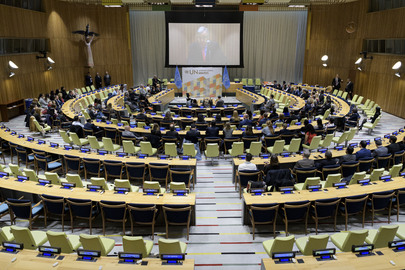
In a country having among the world’s highest numbers of missing persons, Karla Quintana, head of the UN Independent Institution on Missing Persons in the Syria, provided a snapshot of ongoing efforts.
Having processed more than 75,000 documents and sharing information with key partners, the institution has also been focusing on missing migrants and children and those disappeared by terrorist group Da’esh following the fall of the Assad regime in late 2024.
“Syria knows they don’t have to do this alone,” she explained, noting that the institution, established by the UN General Assembly in 2023, continues to work towards locating missing persons and supporting their families.
Challenges remain
While the new Government has granted some access to the institution, Ms. Quintana explained that national authorities have yet to allow the establishment of an office in the country.
Still, accessing, analysing and sharing information remains key to efforts to discover the fate and whereabouts of missing persons, she said.
In that vein, collaborative efforts are ongoing, she said, emphasising that the families of the missing had been the ones to ask for the creation of the institution.
“We are working to give answers to families,” she said.
Watch the full press conference here:
Tackling displacement
At the same time, Syria has a historic opportunity to transform one of the world’s largest displacement crises into an inclusive and sustainable recovery, an independent human rights expert said on Thursday following an official visit to the country.
“Internally displaced persons are among the most affected by Syria’s past, and among those who can contribute most significantly to its future,” said Paula Gaviria Betancur, the UN Special Rapporteur* on the human rights of internally displaced persons.
An estimated 14 million people have been displaced since 2011. While nearly two million internally displaced persons and 1.7 million refugees have returned since December, about 5.5 million people remain internally displaced, with reconstruction needs standing at $216 billion and 15.6 million people continuing to require humanitarian assistance.
Supporting rights
“Supporting their human rights, capacities and participation is an investment into Syria’s social fabric, economic recovery and long-term peace,” she said.
An important measure of success will be whether displaced persons can enjoy their rights and rebuild their lives in safety and dignity, she said.
The Special Rapporteur will be presenting her full report to the Human Rights Council in June 2027.
Read her full statement here.
Earlier this month, UN investigators from the Independent International Commission of Inquiry on Syria urged the Government to continue to trace missing detainees and ensure accountability after its week-long visit, marked by deadly bomb attacks in Damascus and insecurity in the restive south.
Read the full story here.
* Appointed by the UN Human Rights Council, Special Rapporteurs are independent human rights experts who are not UN staff and do not receive a salary for their voluntary work.
Source of original article: United Nations (news.un.org). Photo credit: UN. The content of this article does not necessarily reflect the views or opinion of Global Diaspora News (www.globaldiasporanews.com).
To submit your press release: (https://www.globaldiasporanews.com/pr).
To advertise on Global Diaspora News: (www.globaldiasporanews.com/ads).
Sign up to Global Diaspora News newsletter (https://www.globaldiasporanews.com/newsletter/) to start receiving updates and opportunities directly in your email inbox for free.