
Key points
- 7.8 million South Sudanese face high levels of acute food insecurity.
- El Niño is already threatening farming output.
- Sudan’s war is driving more refugees and returnees into South Sudan.
- Funding shortages and access constraints threaten life-saving food assistance.
“Conflict, displacement, economic hardship, climate shocks, and the situation in neighbouring Sudan are all converging to push millions of people deeper into vulnerability” just as humanitarian resources are starting to run out, said Matthew Hollingworth, WFP Assistant Executive Director for Programme Operations.
Some 7.8 million people, or more than half of the country’s population, struggle to find enough food each day, while 2.2 million children and 1.2 million pregnant and breastfeeding mothers require urgent nutrition support, he told reporters in Geneva.
October deadline
A further million vulnerable people could lose access to life-saving food and nutrition assistance by October without additional resources.
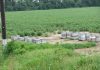
After returning from a visit to the country last week, Mr. Hollingworth insisted that the impact of the “super El Niño” is already immediately clear in South Sudan; even the most fertile agricultural areas have been affected, with crops failing and low yields due to drought.
Beyond South Sudan itself, the regional impact of extreme weather is also being felt in neighbouring Sudan, Eritrea, Ethiopia, Uganda and Kenya, causing a “bigger effect on food security in the entire area”, the WFP official warned.
El Niño is a naturally occurring climate pattern that typically occurs every two to seven years, when waters in the central and eastern equatorial Pacific become unusually warm, with impacts on rainfall and temperature patterns thousands of miles away. This year, El Niño is developing as the oceans are already exceptionally warm. Earlier this month UN chief António Guterres said that the phenomenon is “being supersized before our eyes”.
War in Sudan
Over the border in Sudan, the proximity of what UN humanitarians have called the world’s worst hunger and displacement crisis is making the dire situation even worse.
Each week, the country sees the influx of 3,000 refugees and South Sudanese who were formerly refugees in Sudan, “looking for safety, looking for food, looking for water, looking for shelter”, Mr. Hollingworth said.
The WFP official spoke of meeting women, children and older people in Renk, Upper Nile State, South Sudan, last week, who had “travelled for days, sometimes weeks on foot” to escape fighting between Government and opposition forces, arriving exhausted and hungry “into communities that are already struggling significantly to feed themselves and look after themselves”.
Access challenges continue to compound the crisis. Aid and commercial food transported along the River Nile “face illegal checkpoints and illegal taxation by soldiers across the entirety of the journeys that they take,” increasing operational costs and slowing down the delivery of assistance.
Illegal levies
In Upper Nile State’s capital Malakal, Mr. Hollingworth noted, “if a family is eating something other than tomatoes, okra, chilies and onions that are grown locally, anything else they are eating has been flown into Malakal” as it is too expensive to bring it in by road or by barge, including because of the illegal taxes that have to be paid along the way.
“This is starting not just to raise costs, it’s starting to be a cost in terms of people’s lives,” he concluded.
Source of original article: United Nations (news.un.org). Photo credit: UN. The content of this article does not necessarily reflect the views or opinion of Global Diaspora News (www.globaldiasporanews.net).
To submit your press release: (https://www.globaldiasporanews.com/pr).
To advertise on Global Diaspora News: (www.globaldiasporanews.com/ads).
Sign up to Global Diaspora News newsletter (https://www.globaldiasporanews.com/newsletter/) to start receiving updates and opportunities directly in your email inbox for free.