
It was an act that must never be repeated, said the UN chief for disarmament affairs, at a memorial ceremony in the Japanese city.
“Hiroshima stands as an inspiring example of resilience, renewal and hope,” said Izumi Nakamitsu, speaking on behalf of UN Secretary-General António Guterres.
“Across generations, its people remind us that, even after the darkest moments, we can choose and build a different future.”
Just two days later, a second nuclear bomb targeted Nagasaki on 8 August 1945. The two blasts killed around 120,000 people, with a similar number dying later of burn and radiation injuries, and left behind 650,000 survivors, known as the hibakusha.
Nuclear sabre rattling
Providing a snapshot of the current nuclear weapon landscape, she said deepening geopolitical division, rising mistrust and intensifying competition are straining the norms and guardrails that have helped prevent a “nuclear cataclysm”.
The decades-long trend in nuclear arsenal reductions is reversing, the global norm against nuclear testing is under threat and worldwide, military spending jumped to $2.9 trillion in 2025, she warned.
“Nuclear sabres are being rattled once again in the name of power and coercion,” the UN disarmament chief said, noting that the UN was founded to rid the world of the scourge of war, with the General Assembly’s very first resolution in 1946 aiming at eliminating nuclear weapons.
Hiroshima, shortly after a nuclear bomb was dropped on this city in August 1945.
Promise unfulfilled, but achievable
“That promise remains unfulfilled, but not unachievable,” Ms. Nakamitsu said, emphasising that peace is not secured through fear and might, but through trust, sustained investment in dialogue, diplomacy, and international cooperation, an unwavering commitment to international law and bolstering the global disarmament regime.
Peace is also achieved through all States – especially the nuclear armed – taking action to reduce risks, rebuild confidence, and advance towards total disarmament. There also needs to be “a firm rejection of the zero-sum logic that nuclear weapons are the ultimate guarantee of security, when they are in fact the very opposite.”
She called for clarity and conviction on the 81st anniversary: “Let’s choose dialogue over division, cooperation over confrontation and common security over narrow advantage, and let’s move closer to a world where the tragedy of Hiroshima is never repeated.”
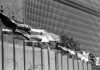
The remains of a wristwatch in Hiroshima recorded the moment an atomic bomb exploded there at 8:15am on 6 August 1945.
The remains of a wristwatch found in the ruins of Hiroshima, Japan, recorded the moment of the atomic bomb explosion at 8:15am local time on 6 August 1945.
We’ve been back through the UN Photo archive to find some of the most compelling and disturbing images related to the bombings: from the instant the world’s first atomic explosion occurred to the decades of hard work by survivors to ensure it never happens again.
View The moment the world changed forever here.
Source of original article: United Nations (news.un.org). Photo credit: UN. The content of this article does not necessarily reflect the views or opinion of Global Diaspora News (www.globaldiasporanews.com).
To submit your press release: (https://www.globaldiasporanews.com/pr).
To advertise on Global Diaspora News: (www.globaldiasporanews.com/ads).
Sign up to Global Diaspora News newsletter (https://www.globaldiasporanews.com/newsletter/) to start receiving updates and opportunities directly in your email inbox for free.