
At least 17 civilians have been killed in attacks by the Houthi group – formally known as Ansar Allah – in government-controlled areas since 6 August, High Commissioner for Human Rights Volker Türk said in an alert.
Two further casualties were reported in opposition-controlled areas in late July.
The Houthis control roughly a third of Yemen’s territory but holds sway over a majority of the population, including the capital Sanaa and the strategic Red Sea port of Hodeidah.
The group has de facto authority in these areas, running its own administration and security services, though it is not internationally recognized — that status belongs to the Saudi-backed Presidential Leadership Council based in Aden.
Spare Yemenis ‘further misery’
“I call on all parties to de-escalate tensions and spare the Yemeni people from further misery,” Mr. Türk said. “The Yemeni people have already suffered way too much from the devastating legacy of years of conflict, displacement and humanitarian crisis.”
UN Spokesperson Stéphane Dujarric reiterated at the daily press briefing in New York on Monday that all attacks risk further deepening civilian suffering and “these attacks must end immediately.”
On 7 August, an Ansar Allah missile struck the Jaw al-Naseem camp for displaced people in Ma’rib, injuring six civilians, including a child.
Two days later, missile and drone attacks on Al-Mokha port in Ta’izz governorate killed three port workers and injured four others.
The rights office (OHCHR) is verifying reports of further attacks on the port on 14 and 15 August that may have caused additional casualties.
A separate attack on a cargo ship in the Bab el-Mandeb Strait on 11 August reportedly killed four crew members – three Pakistanis and one Indonesian – and injured several more, said OHCHR spokesperson Shabia Mantoo.
Fuel storage facilities and a residential compound at the Saudi field hospital in Mokha were among the civilian sites reportedly hit.
International law paramount
“It is critical that all parties abide by international humanitarian and human rights law,” Mr. Türk said. “They must refrain from attacks against civilians and civilian objects and take all feasible precautions to avoid civilian deaths and injuries, and damage to civilian objects.”
With at least 18 million Yemenis already food insecure, he warned that strikes on civilian infrastructure risk deepening an already dire situation. “These attacks must end immediately,” he said.
“We urge all parties to halt immediately any actions that risk returning Yemen to full-scale conflict,” Ms. Mantoo added.
Wider threat, Security Council warned
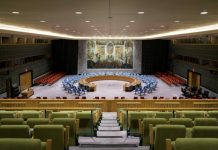
The UN Special Envoy for Yemen, Hans Grundberg, told the Security Council last week that Houthi attacks on commercial shipping threatened both global trade and the country’s fragile truce, which has largely held since 2022.
Reports also indicate that forces of the Yemeni Government carried out nearly 200 strikes on Houthi positions over a 24-hour period, killing and wounding dozens and destroying military equipment and weapons depots.
Yemen’s political and humanitarian crisis, which erupted in 2011, has displaced millions of people, devastated the economy and left around 20 million in need of humanitarian assistance.
Source of original article: United Nations (news.un.org). Photo credit: UN. The content of this article does not necessarily reflect the views or opinion of Global Diaspora News (www.globaldiasporanews.com).
To submit your press release: (https://www.globaldiasporanews.com/pr).
To advertise on Global Diaspora News: (www.globaldiasporanews.com/ads).
Sign up to Global Diaspora News newsletter (https://www.globaldiasporanews.com/newsletter/) to start receiving updates and opportunities directly in your email inbox for free.