
Following two years of war, most of Gaza’s roughly two million residents are living in makeshift shelters.
Humanitarians are working to deliver assistance to communities in flood-prone areas, including by scaling up distribution of winter clothes for children from 5,000 kits a day to 8,000.
UN partners leading winter preparedness efforts reported that some 200 families have left shoreline communities for a new site identified by municipal authorities in what remains of Hamad city, in eastern Khan Younis.
Tents distributed, storm drains cleared
Meanwhile, distribution of tents, tarps, bedsheets and winter clothes to families in urgent need of assistance continues. Work is also ongoing to mitigate flooding by reinforcing high-risk areas with sandbags, emptying storm drains and clearing solid waste.
In other developments, 65 classrooms that were previously used to shelter displaced people have now been cleaned and prepared so that learning activities can take place once again.
“However, partners warn that education materials remain blocked from entering Gaza, disrupting efforts to help children resume their studies,” OCHA said.
Additionally, 260,000 people have received regular food assistance so far this month. This aid, which consists of two food parcels and a 20-kilogram bag of flour, was delivered via 60 distribution sites across the Gaza Strip.
For the first time since August some 3,500 veterinary kits entered Gaza on Friday. The kits and animal fodder were distributed to over 100 herders and donkey owners, highlighting the importance of animals to food security.
OCHA said security incidents also continue, posing risks to the population and humanitarians. On Tuesday, two bullets hit the ground floor of a health centre in Deir Al-Balah run by the UN agency that assists Palestine refugees, UNRWA.
Although no casualties were reported, OCHA noted that the facility is located near the “Yellow Line,” the separation zone near the border with Israel.
UNICEF warns of deepening global crisis for children
Children caught in conflict, disasters, economic turmoil and other emergencies face unprecedented dangers as funding shortfalls force lifesaving projects to close.
The warning comes from UN Children’s Fund (UNICEF), which appealed on Wednesday for more than $7 billion to support 73 million vulnerable boys and girls in the coming year.
UNICEF noted that rising attacks on schools and hospitals, coupled with record levels of child displacement, have intensified pressure on frontline teams.
“Across our operations, frontline teams are being forced into impossible decisions: focusing limited supplies and services on children in some places over others, decreasing the frequency of services children receive, or scaling back interventions that children depend on to survive,” said UNICEF chief Catherine Russell.
The agency also warned that more than 200 million children will need humanitarian assistance in 2026.
UNICEF urged governments, donors and private sector partners to increase investment in children, support national systems and protect aid access before the situation worsens.
$300 million pledged for UN emergency response fund
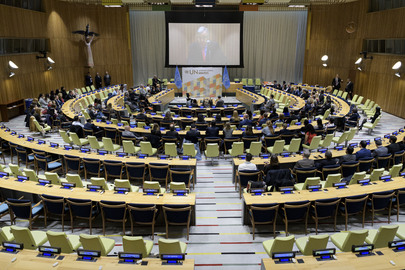
Donors have pledged just over $300 million to support a fund that serves as a first lifeline for millions affected by conflict and disasters, the UN announced on Wednesday.
The contributions to the Central Emergency Response Fund (CERF) were made during a pledging event at UN Headquarters in New York on Tuesday.
UN Emergency Relief Coordinator Tom Fletcher thanked partners for their support, stressing that a fully funded CERF – at $1 billion each year – is not symbolic but a lifeline that is needed now.
Drop in donations
At last year’s pledging event, donor announcements totalled some $351 million. The drop since then reflects the increasingly dire financial outlook for humanitarians as they continue to grapple with the steepest funding cuts ever.
CERF was established 20 years ago to provide urgent humanitarian assistance during crises, with funding often arriving before other sources of support.
The fund has helped hundreds of millions of people with nearly $10 billion in more than 100 countries and territories.
Some $435 million has been allocated this year alone to support millions of people across 30 countries and territories.
Source of original article: United Nations (news.un.org). Photo credit: UN. The content of this article does not necessarily reflect the views or opinion of Global Diaspora News (www.globaldiasporanews.com).
To submit your press release: (https://www.globaldiasporanews.com/pr).
To advertise on Global Diaspora News: (www.globaldiasporanews.com/ads).
Sign up to Global Diaspora News newsletter (https://www.globaldiasporanews.com/newsletter/) to start receiving updates and opportunities directly in your email inbox for free.