
Briefing ambassadors in the Security Council on Tuesday, UN peacekeeping chief Jean-Pierre Lacroix said instability had risen sharply in recent weeks, driven by political deadlock among signatories to the 2018 Revitalised Peace Agreement and a dangerous escalation in armed confrontations.
Fighting has intensified most dramatically in Jonglei state, where clashes between Government forces and opposition elements displaced more than 280,000 people, according to government sources.
Reports of aerial bombardments, inflammatory rhetoric and severe restrictions on humanitarian access have raised fears of a return to the widespread violence seen in 2013 and 2016.
Communities, Mr. Lacroix said, are once again “on the move,” fleeing areas where fighting has erupted and basic services have collapsed.
Click here to read a summary of threats to South Sudan’s peace process and the converging political, security and humanitarian crises, and their impact on civilians.
Humanitarian statistics for South Sudan as of December 2025.
Crisis unravelling
In late January, Government forces instructed civilians, UN personnel and humanitarian workers to temporarily relocate from several counties in Jonglei, including from the UN Mission in South Sudan (UNMISS) base in Akobo, citing an anticipated military operation.
Although the Government later denied issuing such a directive and reiterated its cooperation with humanitarian partners, the episode underscored the volatility of the situation.
Regional bodies, including the African Union (AU) and the Intergovernmental Authority on Development (IGAD), have voiced alarm at the escalation, stressing that there is no military solution and that the peace agreement remains the only viable framework for stability.
Political deadlock deepens
Mr. Lacroix warned that unilateral initiatives to amend the peace agreement risk undermining its primacy, particularly proposals to defer key transitional tasks such as constitution-making until after elections scheduled for December 2026.
The Sudan People’s Liberation Movement/Army-in-Opposition (SPLM-IO) has said it cannot engage in political dialogue while its leader, First Vice-President Riek Machar, remains subject to ongoing legal proceedings, further complicating efforts to break the stalemate.
Mr. Machar, once an ally of President Salva Kiir, has been under house arrest since March 2025 and reportedly faces charges of murder and treason – which he denies.
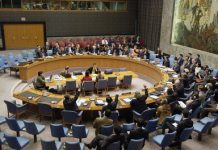
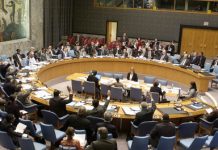
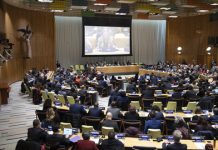
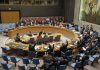
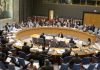
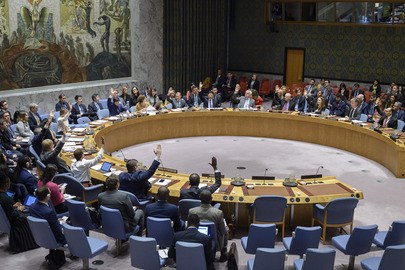
The UN Security Council meets on the situation in South Sudan.
Humanitarian crisis worsens
The deteriorating security situation is compounding what Mr. Lacroix described as one of the world’s most dangerous environments for aid workers.
In 2025 alone, 350 attacks on humanitarian personnel and facilities were recorded, a sharp increase from the previous year, as the country grapples with its worst cholera outbreak on record.
Since September 2024, more than 98,000 cholera cases have been reported nationwide, with a resurgence now underway in Jonglei. Flight restrictions and blocked movements are delaying medical evacuations and the delivery of lifesaving supplies.
Recent incidents include an airstrike on a hospital in Lankien on 3 February, which destroyed critical medical stocks and injured staff, and the looting of a health facility in Pieri the same day. Violence has also forced the closure of 24 nutrition sites in Jonglei, cutting off care for nearly 8,000 children, including more than 2,600 suffering from severe acute malnutrition.
Peacekeepers stretched thin
Against this backdrop, UNMISS is grappling with significant funding-driven capacity reductions.
Mr. Lacroix said cost-cutting measures have already reduced protection patrols by up to 40 per cent in some areas and by as much as 70 per cent where bases have closed. Human rights monitoring missions have been cancelled, and tensions have increased in areas left without a UN presence.
At the same time, the Mission has been forced to redeploy forces to hotspots such as Akobo and establish temporary operating bases to deter violence and protect civilians.
“The trends we are currently observing are clear,” Mr. Lacroix said, urging the Security Council and international partners to ensure sustained political and financial support.
“The presence of UNMISS continues to matter a lot. It matters to the people that we protect, it matters to our humanitarian partners that we assist, and it matters to the peace process that we actively support and engage in.”
Source of original article: United Nations (news.un.org). Photo credit: UN. The content of this article does not necessarily reflect the views or opinion of Global Diaspora News (www.globaldiasporanews.net).
To submit your press release: (https://www.globaldiasporanews.com/pr).
To advertise on Global Diaspora News: (www.globaldiasporanews.com/ads).
Sign up to Global Diaspora News newsletter (https://www.globaldiasporanews.com/newsletter/) to start receiving updates and opportunities directly in your email inbox for free.