
Marathon discussions hosted by Pakistan ended in stalemate this weekend in the country’s capital, Islamabad.
While no agreement was reached, “the discussions themselves underscored the seriousness of their engagement and constituted a positive and meaningful step toward renewed dialogue,” UN Spokesman Stéphane Dujarric said in a statement.
“Given the deeply rooted differences, an agreement cannot be reached overnight, and the Secretary-General calls on the talks to continue constructively for an agreement to be reached. At the same time, the ceasefire must absolutely be preserved. All violations must cease.”
Concern for stranded seafarers
The UN chief thanked Pakistan and the other mediators –Saudi Arabia, Egypt and Türkiye – and called for the international community to support their efforts.
He stressed that all parties to the conflict must respect freedom of navigation, including in the Strait of Hormuz, in line with international law.
The critical maritime corridor, located south of Iran, lies between the Persian Gulf and the Gulf of Oman.
The US announced plans to blockade ships entering and leaving Iranian ports which took effect on Monday.
Meanwhile, some 20,000 seafarers remain stranded on ships in the Persian Gulf and are “facing increasing hardships daily,” the UN statement recalled.
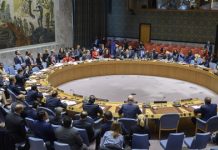
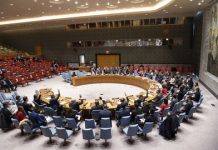
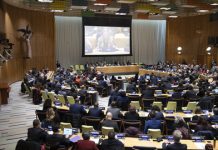
The head of the International Maritime Organization (IMO), Arsenio Dominguez, highlighted the risks in remarks to country delegations gathered for a meeting to discuss security threats at sea.
“It would be very simple for anyone to imagine being in a situation where you have been trapped on board a ship without being able to navigate for over a month now,” he said.
“There is always the concern that supplies may start running low. There is the constant threat that a ship may be targeted or attacked, which endangers the lives of the seafarers.”
Shipping trade disrupted
In normal times, 35 per cent of global crude oil – some 20 million barrels – along with 30 per cent of fertilizer trade and a fifth of liquefied natural gas passes through the Strait of Hormuz daily, according to the UN Food and Agriculture Organization (FAO).
Disruptions in maritime trade have already had direct effects in the region and beyond, with increased global economic fragility and insecurity in many sectors.
The UN warned that “disruption of fertilizer and its inputs further exacerbate food insecurity for millions of vulnerable people around the world, adding to the rising cost of living due to impacts from fuel, transportation and supply chain disruptions.”
Against this backdrop, engagement continues with relevant parties on the design and operation of the recently appointed UN task force on the Strait of Hormuz, the statement said.
Moreover, the Secretary-General’s Personal Envoy for the Middle East Conflict, Jean Arnault, “remains actively engaged in the region, consulting closely with key stakeholders and continuing his outreach in support of a comprehensive and durable agreement.”
Source of original article: United Nations (news.un.org). Photo credit: UN. The content of this article does not necessarily reflect the views or opinion of Global Diaspora News (www.globaldiasporanews.net).
To submit your press release: (https://www.globaldiasporanews.com/pr).
To advertise on Global Diaspora News: (www.globaldiasporanews.com/ads).
Sign up to Global Diaspora News newsletter (https://www.globaldiasporanews.com/newsletter/) to start receiving updates and opportunities directly in your email inbox for free.