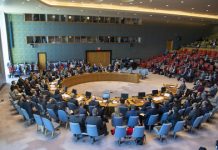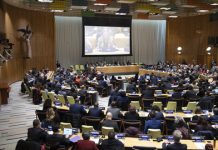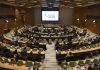

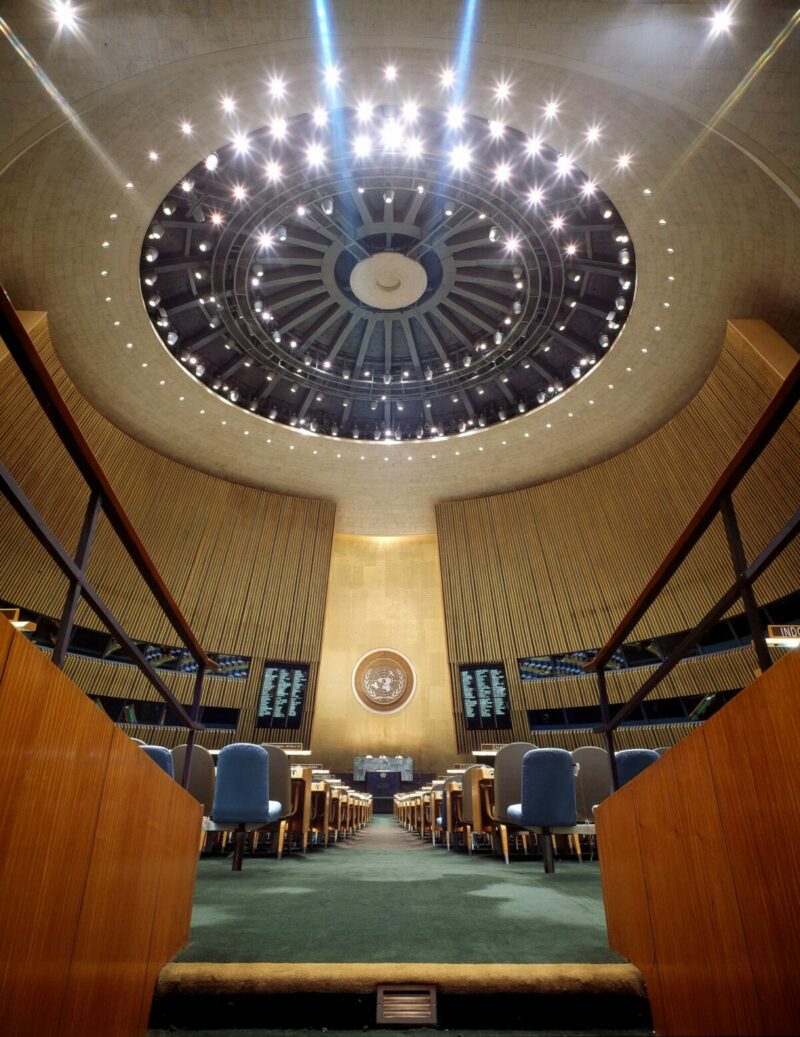
Addressing the UN General Assembly’s annual high-level debate, Ms. Mottley said the world faced multiplying obstacles to peace, food, water, finance, education and opportunity, even as it possessed greater knowledge and capacity to tackle them.
“The failure to address these challenges, therefore, is not one simply of knowledge or capacity,” she said. “It is a repeated failure to convert what we know into what we do.”
Beneath the multiple crises confronting humanity, she argued, lay another: “a crisis of responsibility”.
‘Reform cannot be selective’
The Prime Minister said restoring trust required countries to accept responsibility for one another and for the international institutions they had created.
She called for reform of the United Nations but cautioned that changing its structures would not be enough without addressing questions of power and representation.
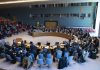
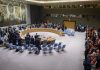
“Reform cannot be selective,” she said, arguing that the Security Council had failed to keep pace with a changing world.
Ms. Mottley highlighted the absence of a permanent seat for Africa and the lack of assured representation for small island developing States, despite the security threats they face.
Barbados, she announced, was joining 123 other Member States in supporting the Franco-Mexican initiative restricting use of the veto in situations involving mass atrocities.
She also called for greater investment in conflict prevention and mediation, alongside adequately resourced peacekeeping.
“The UN must receive the resources and the resolve to act before the guns speak, and not after the guns start to fly,” she said.
Governing AI together
Turning to artificial intelligence, Ms. Mottley described its potential to improve healthcare, disaster prediction, agriculture, education and public services.
But she warned that the same technology could reproduce discrimination, expand surveillance and spread falsehoods faster than institutions could respond.
“We must not allow a new technological age to reproduce old hierarchies of access and power,” she said.
AI governance, she argued, could not be left solely to corporations or technologically advanced countries.
“A technology that will affect every state must be governed by rules that every state has had the opportunity to shape.”
Climate and inequality
Ms. Mottley also returned to one of Barbados’ signature international concerns: climate finance.
Climate-vulnerable countries needed to mobilize approximately $490 billion annually by 2030, she said, compared with current inflows of roughly $90 billion.
“As young people in Barbados would say, the math simply ain’t mathing,” she said.
She argued that climate resilience, debt sustainability and affordable finance could not be treated separately, while also identifying growing inequality as a driver of geopolitical tensions and declining trust.
‘A friend of all’
Turning to the Caribbean, Ms. Mottley called for greater international support for security and political renewal in Haiti, opposed the embargo and other unilateral coercive measures against Cuba, and reaffirmed support for a peaceful resolution of the territorial controversy between Guyana and Venezuela through the International Court of Justice.
“The Caribbean must remain a zone of peace,” she stressed.
As Barbados approaches 60 years since joining the United Nations, Ms. Mottley recalled the foreign-policy principle articulated by the country’s first Prime Minister, Errol Barrow: Barbados would be “a friend of all and a satellite of none”.
Source of original article: United Nations (news.un.org). Photo credit: UN. The content of this article does not necessarily reflect the views or opinion of Global Diaspora News (www.globaldiasporanews.com).
To submit your press release: (https://www.globaldiasporanews.com/pr).
To advertise on Global Diaspora News: (www.globaldiasporanews.com/ads).
Sign up to Global Diaspora News newsletter (https://www.globaldiasporanews.com/newsletter/) to start receiving updates and opportunities directly in your email inbox for free.