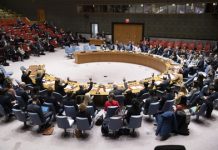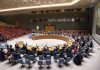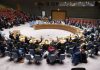

They urged swift implementation of recent agreements to prevent renewed fighting, protect civilians and preserve fragile gains made during the country’s transition.
A country still on edge
One year into Syria’s post-Assad transition, nearly three million refugees and internally displaced people have returned home, a sign of cautious progress.
But UN officials cautioned that the country remains extremely fragile after more than a decade of war.
The ISIL/Da’esh terrorist group continues to pose a persistent threat, sectarian and ethnic tensions remain unresolved, and the presence of foreign fighters and unsecured detention facilities raises serious security concerns.
At the same time, humanitarian needs remain acute, with only about a quarter of the funding required for winter assistance secured, leaving millions without adequate support amid extreme cold.
Regional dynamics are adding further strain. UN officials warned that continued incursions by Israel in southern Syria undermine the country’s sovereignty and territorial integrity, and risk further destabilizing an already volatile environment.
Against this fragile backdrop, the situation in northern and northeastern Syria has deteriorated sharply in recent weeks.
Talks stall, fighting resumes
Repeated attempts at dialogue and mediation between the Syrian government and the Syrian Democratic Forces (SDF) have failed to prevent renewed violence, Khaled Khiari, UN Assistant Secretary-General for Political Affairs, told ambassadors.
A further round of talks earlier this month did not advance implementation of a March 2025 agreement aimed at integrating the SDF into state institutions, UN officials said. Shortly afterward, clashes erupted in SDF-controlled neighbourhoods of Aleppo, forcing tens of thousands of civilians to flee.
“Following several days of intense fighting…tens of thousands fled, most of whom have started to return, dozens were killed, hundreds were wounded, and persons are still missing,” he said.
Although a ceasefire and “full integration agreement” was announced on 18 January with mediation by the United States and other partners, implementation quickly faltered.
Fighting resumed after talks broke down the following day, and clashes were still being reported in parts of Al-Hasakeh governorate and around Ayn al-Arab, also known as Kobane.
“We strongly appeal for both sides to immediately adhere to a ceasefire…and engage in fleshing out and implementing the details of this latest understanding swiftly and in a spirit of compromise,” Mr. Khiari said, warning of an “alarming humanitarian and protection crisis” if the violence continues.
He said recent government decrees recognizing the linguistic, cultural and citizenship rights of Syrian Kurds were “encouraging initiatives” but stressed that they must be followed by inclusive political processes to build trust and national cohesion.
Fragile gains, deep needs
The political tensions are unfolding against a backdrop of immense humanitarian strain.
Edem Wosornu, Director of Crisis Response at the UN Office for the Coordination of Humanitarian Affairs (OCHA), said recent fighting had once again exposed how vulnerable Syria remains after 14 years of war.
Clashes this month forced tens of thousands from their homes in Aleppo and triggered new displacement across Ar-Raqqa, Deir ez-Zor and Al-Hasakeh governorates.
As of 18 January, more than 13,000 people had fled Ar-Raqqa alone, many seeking refuge in overcrowded collective centres.
“The fighting has cut people off from clean water, some hospitals have been forced to close, and many children cannot attend school,” Ms. Wosornu said, adding that damaged roads, unexploded ordnance and winter storms were hampering aid deliveries.
Displaced families are facing “bitter winter conditions,” she said, with urgent needs for shelter, food and heating. Heavy snow and extreme cold have affected nearly 160,000 people living in camps, damaging shelters and contributing to the deaths of two infants.
Despite access challenges, UN agencies and partners continue to deliver aid, including food, shelter, medical supplies and protection services. Emergency funding has been released to support displaced families, and reception centres have been established in Al-Hasakeh and Qamishli.
“Syria can make further progress,” Ms. Wosornu said, but this hinges on sustained humanitarian funding, increased investment in recovery and development, and active diplomacy to prevent further violence and protect civilians.
Source of original article: United Nations (news.un.org). Photo credit: UN. The content of this article does not necessarily reflect the views or opinion of Global Diaspora News (www.globaldiasporanews.com).
To submit your press release: (https://www.globaldiasporanews.com/pr).
To advertise on Global Diaspora News: (www.globaldiasporanews.com/ads).
Sign up to Global Diaspora News newsletter (https://www.globaldiasporanews.com/newsletter/) to start receiving updates and opportunities directly in your email inbox for free.