
As conflict and instability rage, “millions of Muslims around the world carry that pain with them,” said António Guterres marking the International Day to Combat Islamophobia: “Let us recommit to equality, human rights and dignity of every person, everywhere.”
The Secretary-General warned that for far too many Muslims living as minorities, their daily lives face being shaped by exclusion, institutional discrimination, socioeconomic marginalisation, unwarranted surveillance and profiling.
Bias fuels divisions
As the world’s two billion Muslims approach the end of the holy month of Ramadan, Mr. Guterres called on governments to take responsibility and introduce measures that “safeguard equality, not entrench prejudice.”
Mr. Guterres warned against the “subtle biases” that rarely make headlines but nonetheless “shape lives, erode trust, and send a clear message about who is seen as belonging and who is not.”
These could be “opportunities quietly denied, assumptions left unchallenged, or questions weighted down by suspicion” and “are driven – and dangerously amplified – by anti-Muslim rhetoric, misinformation, and outright hate.”
Digital amplification
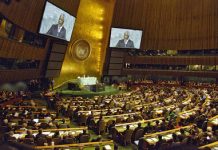
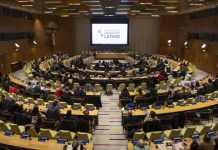
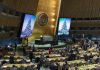
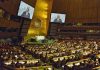
Also addressing the event in New York, General Assembly President Annalena Baerbock said that those prejudices are now amplified in the digital age – with technologies supposed to increase connection, instead “accelerating the spread of misinformation and prejudice at an unprecedented speed.”
“The consequences are painfully real,” Mr. Gutteres said, with harassment, intimidation, vandalism, threat, and attacks on people and mosques, these acts are an “assault on the values that underpin peaceful, inclusive societies everywhere.”
“Standing up against Islamophobia is not only about defending one religious community. It is about defending our shared humanity,” Ms. Baerblock said.
“I encourage governments, international institutions, technology companies, and civil society to follow the example of the United Nations and play a proactive role in challenging harmful stereotypes while promoting accurate and responsible information,” she added.
Take responsibility
In his speech to the assembly, Mr. Guterres said that when discrimination is “echoed by those in positions of authority, prejudice becomes normalised.”
“When stereotypes are left unchallenged, they harden into policy. And when fear is allowed to guide decision-making, injustice follows.”
“Governments have a clear responsibility,” he added, urging them to take action and bring forward legislation and security measures that protect people and respect human rights, “not stigmatize entire communities.”
He also emphasised the responsibility of technology companies and said that “online spaces should bring people together, not drive them apart,” adding that “they must do far more to identify, prevent, and address hate speech and harassment.”
Silence fuels hatred
“Silence in the face of hatred only allows it to spread,” the Secretary-General underscored, and we all have a responsibility to speak out against bigotry, xenophobia, and discrimination.
“As Ramadan draws to a close, Muslims around the world reaffirm values that also form the foundation of the UN Charter...These universal principles must guide our global response to hatred and division.”
Source of original article: United Nations (news.un.org). Photo credit: UN. The content of this article does not necessarily reflect the views or opinion of Global Diaspora News (www.globaldiasporanews.com).
To submit your press release: (https://www.globaldiasporanews.com/pr).
To advertise on Global Diaspora News: (www.globaldiasporanews.com/ads).
Sign up to Global Diaspora News newsletter (https://www.globaldiasporanews.com/newsletter/) to start receiving updates and opportunities directly in your email inbox for free.