
Despite the volatility, the UN peacekeeping mission, MONUSCO, remains committed to delivering on its mandate, as regional efforts to restore peace continue.
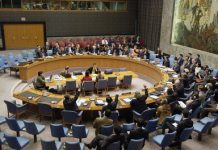
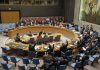
Vivian van de Perre, Deputy Special Representative for Protection and Operations with the mission, said that ‘blue helmets’ would continue the full spectrum of their activities in Ituri, supporting the ceasefire as well as offering protection to civilians in North Kivu – while focusing exclusively on ceasefire-related functions in South Kivu.
MONUSCO has been in the DRC since July 2010, taking over from an earlier UN peacekeeping operation in a conflict stemming from the 1994 genocide against the Tutsi in neighbouring Rwanda. MONUSCO’s mandate includes protecting civilians and helping the DRC to stabilise and consolidate peace.
‘Alarming’ situation as conflict continues
The deputy chief’s briefing came as clashes between rebel militia groups, AFC and M23, and forces supporting the Government in Kinshasa intensify in the Kivus, despite the M23 militia’s withdrawal from Uvira in January.
The violence is also spreading toward Burundi’s border, raising fears of a broader regional conflict.
In Ituri province, “the situation remains alarming” with rebel attacks causing casualties, displacement, and damage to infrastructure, the UN official said.
“Recent hostilities between the government and AFC/M23 have also been marked by the growing use of offensive drones, as well as by continued jamming and spoofing of GPS signals,” Ms. van de Perre said.
Attacks from another rebel group, the ADF, have also resumed in the Mambasa territory, far from their traditional areas of operations.
Diplomatic push for peace
“Despite these challenges, diplomatic efforts to support the implementation of ongoing peace processes are ongoing,” Ms. van de Perre said.
She welcomed the renewed commitment by the DRC and Rwanda to move forward with the Washington Accords following their 17–18 March meeting in the US capital, where both sides agreed on concrete steps to implement the peace agreement and reduce tensions.
She also noted progress through the Doha process and African Union-led initiatives, which have helped build a ceasefire framework.
Ms. van de Perre added that a recent “joint exploratory mission” to Uvira found that that security guarantees and freedom of movement are essential before deployment can proceed.
She urged the Council to exercise its influence to translate this progress into the rapid reopening of Goma and Kavumu airports and the resumption of flights
“I encourage all political and civil society actors to find common ground on the scope, objectives, and modalities of the national dialogue,” she said.
Supporting civilians
Vivian van de Perre said MONUSCO continues to provide protection where it has sheltered nearly 3,000 civilians who fled violence from rebel militia in Djaiba village and sought refuge in the UN’s Fataki base.
She noted that the Missions support, including conducting 204 patrols, enabled 18,000 farmers to harvest and transport their crops.
However, she stressed that stronger governance and security sector reform are essential if the State is to meet its primary responsibility to protect civilians, while disarmament and repatriation efforts must advance in parallel to reduce tensions.
Against this backdrop, “the humanitarian landscape has shifted dramatically”, the UN official said, adding that 6.4 million people are currently internally displaced across the country.
“While current humanitarian efforts remain essential, they are insufficient and compounded by significant funding challenges,” she added that 26.6 million people, a quarter of the population, are expected to face food insecurity in the DRC this year.
“Humanitarian action alone cannot carry the burden of peace, particularly in a context where humanitarian actors continue to be targeted, with ten incidents reported since December 2025,” Ms. van de Perre said.
Human rights abuses
The UN Joint Human Rights Office in DRC has continued to document grave human rights violations by both armed groups and state actors since the Security Council was last briefed in December 2025.
“Since December 2025, 173 cases of conflict-related sexual violence were confirmed, affecting 111 victims, mostly women and girls, which is, as we know, only the tip of the iceberg.”
Ms. van de Perre also warned that restrictions on MONUSCO’s access are hampering its ability to monitor, investigate, and report on abuses, while human rights defenders, journalists, and civil society actors in rebel-controlled areas continue to face intimidation and arbitrary detention.
She further underscored that child forced labour remains a serious concern at artisanal mining sites, where exploitation helps fuel the conflict.
Source of original article: United Nations (news.un.org). Photo credit: UN. The content of this article does not necessarily reflect the views or opinion of Global Diaspora News (www.globaldiasporanews.com).
To submit your press release: (https://www.globaldiasporanews.com/pr).
To advertise on Global Diaspora News: (www.globaldiasporanews.com/ads).
Sign up to Global Diaspora News newsletter (https://www.globaldiasporanews.com/newsletter/) to start receiving updates and opportunities directly in your email inbox for free.