
Reacting to the collapse of COP31, the Secretary-General said he was “deeply disappointed” that governments meeting in Antalya, Türkiye, had failed to reach consensus, but stressed that the outcome did not alter the realities of the climate crisis.
What you need to know
- COP31 closed without a final climate pact after two weeks of negotiations and two days of overtime talks.
- Disagreement over fossil fuel language proved the main obstacle to consensus.
- Several countries formally objected to the final text, saying it weakened previous commitments and failed to meet the urgency of the climate crisis.
- António Guterres called the outcome a setback but insisted there remains “no ambiguity in the science” and urged faster climate action.
No ambiguity in the science
“There may be no consensus in the negotiating room. There is no ambiguity in the science,” the UN chief said in a statement.
He warned that global temperatures continue to break records, climate impacts are intensifying and greenhouse gas emissions remain dangerously high, while the world is now on course to exceed the internationally agreed 1.5°C warming limit.
“The take-home message from COP31 is clear: the world must do much more to confront the climate crisis – and it must do it now,” he said.
Mr. Guterres argued that fossil fuels remain the primary driver of global warming and cautioned against efforts to delay the transition to cleaner energy.
“We can’t put out the fire while pouring fuel on it,” he said, accusing powerful fossil fuel interests of obstructing climate action while continuing to profit.
The Secretary-General noted that governments had already agreed at COP28 in Dubai to transition away from fossil fuels and said the priority now must be to accelerate and finance that shift.
He also called for deeper emissions cuts this decade, stronger support for vulnerable countries and substantially increased adaptation finance, stressing that those least responsible for climate change should not be left to bear its heaviest consequences alone.
Looking beyond the negotiating halls, Mr. Guterres said the real measure of progress would be whether countries reduce fossil fuel dependence, expand clean energy, cut methane emissions, restore forests and deliver climate finance to developing nations.
Addressing civil society, young people, Indigenous Peoples, scientists and frontline communities, he urged campaigners to keep pressing for action and accountability.
“The climate crisis will not wait for governments to find common ground. Neither can we,” he said. “Keep spreading the facts. Keep demanding action. Keep turning up the heat.”
Days of deadlock
COP31 President Murat Kurum, Türkiye’s environment minister, acknowledged the impasse, saying: “I understand that there is no agreement on this text. For that reason, these decisions have not been adopted.”
The inconclusive talks followed days of deadlock over fossil fuels, with negotiators unable to bridge differences between a coalition of climate-vulnerable nations and countries pushing for a stronger commitment to move away from coal, oil and gas, and those seeking to protect economies heavily dependent on fossil fuel exports.
Multiple compromise drafts circulated by COP31 co-presidents Australia and Türkiye sought to win consensus, including by acknowledging that global warming is now on course to exceed the 1.5°C threshold while calling for expanded carbon-removal technologies.
But the effort ultimately failed, with critics arguing the text weakened previous commitments and fell far short of the action required to address the climate crisis.
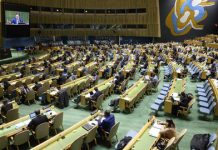
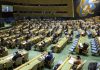
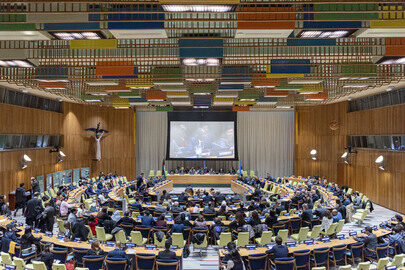
Delegations in the main hall at the closing pleanry of COP31, the latest UN climate conference, being held this year in Antalya, Türkiye.
Countries back climate cooperation but lament weakened ambition
While reaffirming their commitment to multilateral climate action, delegations warned against “mistaking the drama of negotiations for impact”, describing the final draft pact as “the lowest common denominator” and saying it failed to meet the moment.
The European Union formally objected to the cover decision, saying it failed to “meet the moment” and warning that it risked widening the gap between climate commitments and real-world action. The bloc said it could not accept a text that omitted any reference to fossil fuels or a transition away from them, describing such an omission as “unconscionable.”
Panama also rejected the outcome, arguing that governments have a responsibility “not to negotiate the minimum threshold, but to act.” The delegation said the pact weakened previously agreed decisions and failed to reflect the urgency of keeping the 1.5°C goal within reach. Recalling a letter sent to the COP presidency outlining several non-negotiable priorities, Panama said its position remained unchanged and that it could not support the agreement as drafted.
Pakistan urged delegates to continue working toward consensus, warning that climate action requires “bridges, not barriers.” The delegation said that while parts of the text remained problematic for some countries, the broader package should not be sacrificed and insisted that a way forward remained within reach.
The Marshall Islands also withheld its support, warning that the deal failed countries on the front lines of climate change. The delegation said accepting the text would amount to a betrayal of its people, criticised what it called “false solutions”, and argued that faster movement away from fossil fuels, backed by stronger financial support, remained essential.
Speaking on behalf of the African Group, Ghana acknowledged shortcomings in areas including climate finance, loss and damage and the just transition, which it said received “a single generic sentence”. Nevertheless, it said the group would not stand in the way of consensus, arguing that the text still reflected the views of a wide range of parties.
Representing the League of Arab States, Saudi Arabia defended references in the text to carbon capture and storage (CCS), rejecting suggestions that the technology constituted greenwashing. The delegation argued that scientific assessments have identified a role for CCS in limiting warming and said all viable climate solutions should remain on the table. Despite reservations over other aspects of the negotiations, it pledged to remain constructively engaged.
MORE TO FOLLOW…
Source of original article: United Nations (news.un.org). Photo credit: UN. The content of this article does not necessarily reflect the views or opinion of Global Diaspora News (www.globaldiasporanews.com).
To submit your press release: (https://www.globaldiasporanews.com/pr).
To advertise on Global Diaspora News: (www.globaldiasporanews.com/ads).
Sign up to Global Diaspora News newsletter (https://www.globaldiasporanews.com/newsletter/) to start receiving updates and opportunities directly in your email inbox for free.