
Countries that do not usually negotiate together stood side by side during a press conference in Antalya on Friday, with a message for the COP31 Presidency: the agreement on the table is not good enough.
Led by France and Panama, ministers and representatives from across the world including Belgium, Côte d’Ivoire, Finland, Greece, Guatemala, Spain, Sweden and Vanuatu, joined forces to demand stronger climate action.
“We cannot [tell] the world we are now getting to 1.5 [degrees of warming] and then do business as if nothing was happening,” said France’s Minister for Ecological Transition, Monique Barbut.
For many people, she underscored; the climate crisis is not a “North” or “South” issue, but a question of survival.
Panama’s Environment Minister, Juan Carlos Navarro, who made headlines earlier this week when he announced that his country would formally object to any COP31 agreement failing to include fossil fuels language, was equally direct.
Decisions at UN climate summits are generally adopted by consensus, meaning that even a single country’s formal objection can prevent an agreement. Panama’s warning could therefore delay or derail adoption of the final COP31 deal as the clock winds down.
“It is not acceptable to have a COP or a cover document that does not even mention fossil fuels, and we simply will not put up with it,” he said.
The disputes echo warnings from UN Secretary-General António Guterres, who told world leaders in Antalya last week that governments must accelerate the transition away from fossil fuels, protect workers and communities, and deliver the climate finance promised to developing countries.
He called for adaptation funding to triple by 2035 and urged governments to tax windfall profits from fossil fuel companies to help vulnerable nations recover from climate disasters.
“Polluters must pay,” he insisted, warning that the world could not afford further delays.
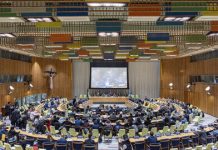
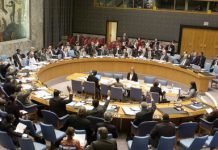
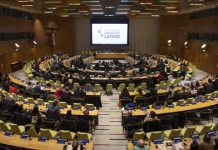
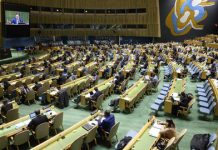
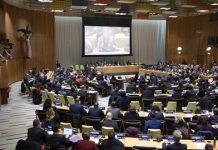
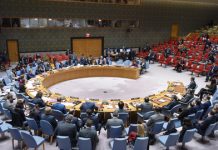
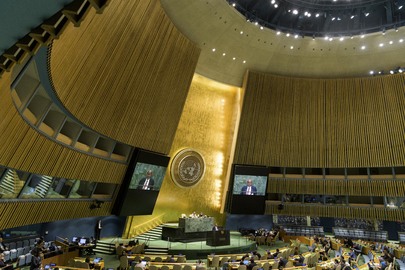
Delegates negotiate at COP31 in Antalya, Türkiye.
The countries outlined six priorities they wanted to see reflected in the COP31 agreement:
- Science: Ensure that climate decisions are firmly grounded in scientific evidence.
- Fossil fuels: Explicitly recognize the need for a clear and orderly transition away from fossil fuels.
- Climate finance: Require those most responsible for emissions to contribute fairly to financing climate action.
- Clean electrification: Accelerate the shift towards electricity generated from renewable, clean energy sources.
- Methane: Speed up reductions in methane emissions, one of the quickest ways to slow global warming.
- International cooperation: Strengthen coordination between the three Rio Conventions on climate change, biodiversity and desertification.
“You pollute; you pay. It’s actually rather simple. You cause the problem, you must help to fix it,” Mr. Navarro said.
Ms. Barbut also pointed to another contradiction that has been on the minds of many since the second draft was published: while fossil fuels are absent from the draft, several paragraphs promote carbon capture technologies.
“So what does it mean? It means we don’t recognize what is the problem,” she argued.
The COP31 mascot lies dismantled backstage at the UN climate conference in Antalya, Türkiye, as negotiations over a final agreement continue on the summit’s scheduled closing day.
‘Worst COP ever?’
By Friday afternoon, the COP31 Presidency had not published a new version of the proposed Antalya Accord, leaving delegations still working from Thursday’s draft.
The patience of the activists today was wearing thin. Armed with black signs that spelled “shame”, a huge group of civil society organization representatives stood behind the speakers of the final press conference of the Climate Action Network (CAN).
The global coalition of environmental organizations rejected the proposed agreements and urged developing countries to do the same.
“There is nothing on the table that protects people or addresses the priorities of the Global South,” said CAN International Executive Director Tasneem Essop.
Campaigners accused wealthy countries of blocking progress on finance, emissions reductions and a mechanism to support workers and communities affected by the shift to cleaner economies.
Mohamed Adow, founder of Power Shift Africa, was even more direct.
“The COP Presidents want to tell us this has been a great COP. Well, I can tell you without any doubt that this has been the worst COP ever.”
He accused developed countries of demanding greater ambition while withholding the support needed to deliver it.
“The COP is not dying; [It’s] being killed. Not because it’s bloated. Not because it’s inefficient or useless. It’s being killed because it’s the last space where civil society, where developing countries, can hold developed countries accountable,” said Anabella Rosemberg, CAN Senior Adviser on Just Transition, defending the importance of the UN climate process.
Follow the latest developments from COP31 through our new podcast, Talk & Action, and our special daily coverage of the conference.
Source of original article: United Nations (news.un.org). Photo credit: UN. The content of this article does not necessarily reflect the views or opinion of Global Diaspora News (www.globaldiasporanews.com).
To submit your press release: (https://www.globaldiasporanews.com/pr).
To advertise on Global Diaspora News: (www.globaldiasporanews.com/ads).
Sign up to Global Diaspora News newsletter (https://www.globaldiasporanews.com/newsletter/) to start receiving updates and opportunities directly in your email inbox for free.